
Recent Post

The complete sword accessory checklist for cosplay

Top Viking Inspired Sword Designs for Collectors

Fantasy Sword Design: History, Craft, and Symbolism

Viking sword design: origins, features, and legacy

Medieval Swords Explained: History, Design, and Real Use

Swords in martial arts: history, techniques & practice
Leave a comment
The complete sword accessory checklist for cosplay
TL;DR:
- Proper accessories enhance cosplay authenticity, safety, and visual impact in displays.
- Choosing accessories based on context, authenticity, durability, and aesthetic contribution is essential.
- Attention to detail and reference images ensure cohesive, professional-looking sword setups.
You spend weeks hunting down the perfect replica, matching every detail to your favorite character, and then convention day arrives only for you to realize you forgot your scabbard at home. Or you finally mount your prized katana collection on the wall, and the whole setup looks flat because there’s no lighting and the blades are facing the wrong direction. These are the moments that haunt cosplayers and collectors alike. This checklist exists to make sure they never happen to you. Whether you’re prepping for a convention floor or building a jaw-dropping display shelf, every essential accessory is covered here.
Table of Contents
- Criteria for choosing sword accessories
- Cosplay essentials: Equip your character
- Display essentials: Showcasing your collection
- The complete sword accessory checklist
- Expert tips and advanced nuances
- Our take: Why the best accessory is attention to detail
- Bring your sword setup to life with premium accessories
- Frequently asked questions
Key Takeaways
| Point | Details |
|---|---|
| Start with criteria | Choose accessories based on practicality, authenticity, and the context of cosplay or display. |
| Costume essentials | Belts, scabbards, gloves, and peace-bonding set the foundation for safe and realistic cosplay. |
| Display accessories matter | Use UV-protective cases, stands, and lighting to preserve and present your collection. |
| Checklist saves time | A comprehensive checklist ensures nothing is overlooked for conventions or showcases. |
| Details make a difference | Attending to minor details and expert nuances sets your setup apart from the crowd. |
Criteria for choosing sword accessories
Not every accessory deserves a spot in your bag or on your display shelf. Before you start buying belts, stands, and LED strips, you need a clear set of criteria that tells you what actually belongs on your list and what’s just clutter.
The first thing to sort out is your context. Cosplay and display are two very different environments with two very different demands. Cosplay accessories include belts, scabbards, gloves, and sheaths, while display needs shift toward UV-protective cases, LED lights, felt backgrounds, and sword stands. Buying a display stand for a convention costume makes no sense, just as packing LED strip lights into your cosplay bag won’t help you on the convention floor.
Next, consider authenticity. For cosplayers, the goal is to match the source material as closely as possible. For collectors and display enthusiasts, authenticity means choosing accessories that complement the historical or cultural origin of the blade. A Norse-inspired sword looks best on a rustic wooden stand, while an anime-inspired katana replica deserves a sleek, modern mount or a traditional Japanese-style rack.
Practicality and safety come right after authenticity. A beautiful scabbard that doesn’t fit your blade is worse than no scabbard at all. Always verify compatibility, especially if you own a full-tang replica, which adds weight and requires sturdier carry solutions than hollow props.
Here’s a quick list of the core criteria to check every accessory against before adding it to your list:
- Context fit: Is this for cosplay, display, or both?
- Authenticity: Does it match the character, era, or style?
- Safety and practicality: Is it durable, does it fit, and is it convention-safe?
- Durability and material quality: Will it last through a full convention day or years on a shelf?
- Aesthetic contribution: Does it elevate the overall look, or does it create visual noise?
- Reference accuracy: Does it match your source images and character design?
Using strong anime sword buying tips during the selection phase will save you money and frustration later.
Pro Tip: Choose accessories that serve both aesthetics and function at the same time. A well-fitted leather scabbard with accurate stitching looks incredible in photos and keeps your blade protected all day. That’s the ideal accessory.
Cosplay essentials: Equip your character
With the right criteria in mind, here’s exactly what every cosplayer will need to complete their ensemble. These aren’t nice-to-haves. These are the items that separate a polished, stage-ready character from someone who looks like they grabbed a sword prop and called it a day.
Good replica sword tips always start with the carry system, because a sword you can’t carry confidently is a sword that becomes a problem by hour two of any convention. Follow this ordered list to build your cosplay accessory kit from the ground up:
-
Belt and harness system: This is your foundation. A sturdy belt designed for sword carry distributes weight evenly and keeps your prop secured without constant adjustment. Hip-carry belts work for most Western sword styles, while back harnesses suit longer blades or dual-sword builds.
-
Scabbard or sheath: Cosplay accessories always include a well-fitted scabbard because it defines your character’s silhouette, protects the blade tip, and makes you look like you actually know how to wear a sword. Match the material and color to your character’s design.
-
Gloves, hand wraps, and gauntlets: These add enormous character depth without much cost. A fingerless tactical glove reads completely differently than an armored gauntlet, and the right choice can make or break the overall look. Match them to your character’s faction, era, or fighting style.
-
Costume connectors and prop clips: These are the unsung heroes of cosplay. Invisible clip systems and velcro connectors keep your scabbard from rotating or sliding, especially during long walk-around sessions.
-
Character-accurate decorative details: Tassels, tsuba ornaments (the hand guard on Japanese swords), pommel covers, and cord wrapping (called tsuka-ito on katanas) are finishing touches that only the sharpest cosplayers include. These are the details judges and photographers notice.
-
Peace-bonding supplies: Many conventions require metal props to be peace-bonded, meaning secured so they cannot be drawn. Bring zip ties or designated peace-bonding ribbon in your cosplay kit. Check each event’s specific policy before you pack. A complete sword prep guide will walk you through the specifics of readying metal props for public events.
Understanding the full role of swords in cosplay helps you make better decisions about which accessories actually serve your character concept and which ones just add unnecessary bulk.
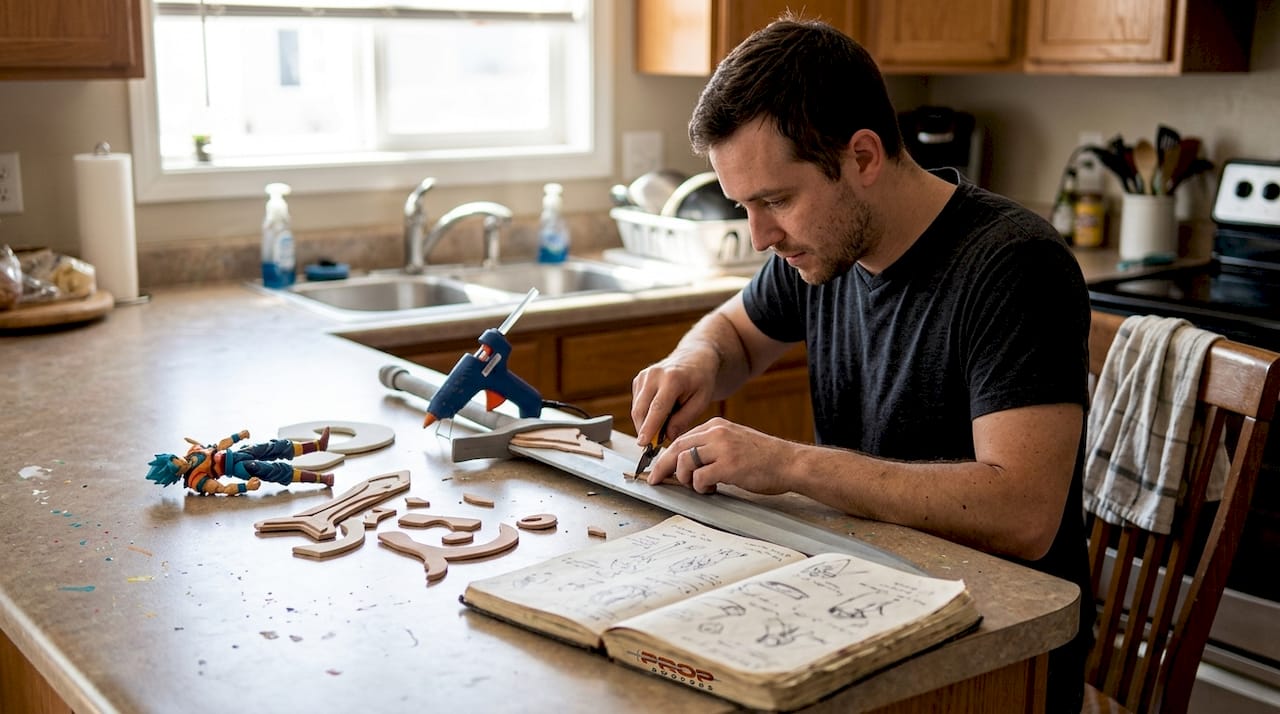
Pro Tip: Use foam clay or lightweight air-dry foam to fabricate small decorative details and accents that would be too heavy or expensive in their original material. A pommel jewel sculpted from foam and painted with metallic acrylic looks stunning in photos and weighs almost nothing.
Display essentials: Showcasing your collection
Once your costume is set, collectors should turn their attention to elevating displays with accessories built for visual impact and longevity. A sword replica that sits in a drawer or leans against a wall isn’t a collection. It’s storage. The right display accessories transform your blades into a gallery.
Proper sword display starts with protection, because no amount of aesthetic planning matters if your blade deteriorates within a year. Here are the core display accessories every collector needs:
- UV-protective display cases: Prolonged exposure to sunlight causes blade finishes to fade and wooden handles to crack. UV-protective cases, as noted in display best practices, are the single most important investment for long-term collection health.
- LED accent lighting: Cool white or warm amber LEDs mounted inside display cases or along shelf edges add dramatic depth. They highlight blade geometry and make decorative engravings pop in ways that overhead room lighting simply can’t achieve.
- Felt backgrounds and liners: Dark felt (navy, black, or deep burgundy) provides a neutral backdrop that makes blades read clearly. It also prevents metal-on-surface scratching inside cases or on open shelving.
- Sword stands and wall mounts: Horizontal stands are ideal for longer swords, while vertical mounts suit katanas and shorter blades. Adjustable stands give you flexibility as your collection grows.
Here’s a quick comparison of the most popular display accessories:
| Accessory | Best for | Key feature |
|---|---|---|
| UV-protective case | All collections | Prevents fading and environmental damage |
| LED strip lighting | Shelf or case displays | Creates dramatic, gallery-style visual depth |
| Felt-lined stand | Individual blade display | Protects blade finish, adds elegant backdrop |
| Wall-mounted bracket | Space-saving display | Maximizes visual impact with minimal footprint |
| Horizontal sword rack | Multi-sword collections | Organizes multiple blades cleanly and safely |
Placement matters just as much as the accessories themselves. Keep blades away from direct sunlight and high-humidity areas like bathrooms or uninsulated garages. The benefits of sword display go well beyond aesthetics, including preservation of value and the satisfaction of seeing your collection properly honored.
The complete sword accessory checklist
With individual essentials now covered, refer to this master checklist to ensure you’ve missed nothing for your next event or showcase. This is your go-to reference whether you’re packing for a convention or setting up a new display shelf.
Cosplay accessories and display accessories serve distinct purposes, but some items overlap. Here’s the full breakdown:
| Accessory | Best use | Notes |
|---|---|---|
| Belt and harness | Cosplay | Match to character; check weight rating |
| Scabbard or sheath | Cosplay | Fit-test before the event |
| Gloves or gauntlets | Cosplay | Match era, faction, and character style |
| Peace-bonding supplies | Cosplay | Required for metal props at most cons |
| Decorative accents | Cosplay | Foam clay is lightweight and paintable |
| UV-protective case | Display | Essential for long-term blade preservation |
| LED accent lighting | Display | Cool white for modern; warm amber for historical |
| Felt liner or background | Display | Deep colors enhance blade visibility |
| Sword stand or wall mount | Display | Confirm blade weight capacity |
| Horizontal multi-blade rack | Display | Ideal for growing collections |
A few advanced notes worth adding to your checklist:
- When choosing replica swords for display, prioritize replicas with sealed, corrosion-resistant finishes.
- For medieval sword comparisons, understand that longer blades require wider stands and deeper cases.
- Traditional katana display places the blade edge upward, which is the respectful orientation rooted in Japanese sword culture. Displaying edge-down is generally considered incorrect for a katana.
- Avoid direct sun exposure and high humidity in any storage or display environment.
Expert tips and advanced nuances
Finally, there are details and tricks only seasoned cosplayers and display experts focus on. These are the subtle choices that get you compliments from other collectors, not just casual attendees.
The first advanced habit to build is using reference images at every stage. Don’t trust your memory or a general description. Pull up high-resolution screenshots, official art, or replica product photos and cross-reference every accessory against them. Color tones, belt buckle shapes, and scabbard texture can differ significantly between a fan interpretation and the source design, and those differences are always visible in photos.
Choosing full-tang sword replicas adds structural integrity that matters both for display longevity and for cosplay. A full-tang blade, where the metal runs the entire length of the handle, resists wobble and is significantly more durable under the stress of travel, posing, and convention conditions.
Here are the expert-level details that separate good setups from great ones:
- Blade orientation in display: This isn’t arbitrary. Katana blades displayed edge up show respect and follow traditional Japanese sword etiquette.
- Peace-bonding done right: Use bright, official-colored ribbon or zip ties as specified by each convention’s rules. A poorly peace-bonded prop draws unwanted attention.
- Leather care for scabbards and belts: Natural leather accessories need conditioning every few months to prevent cracking and color fading.
- Foam fabrication for custom accents: Advanced cosplayers use heat-shaped EVA foam with a Dremel tool to carve precise decorative details that match sword belt and scabbard designs from source material. The result looks far more authentic than generic store-bought pieces.
“The best sword accessories are the ones you never have to think about once they’re on. They fit, they last, and they add to the scene instead of pulling focus. Avoid direct sunlight for any leather or blade finish, store replicas vertically when possible, and condition leather accessories at least twice a year to maintain their structure and color.”
Our take: Why the best accessory is attention to detail
Here’s the honest truth that most accessory guides won’t tell you: a long list of purchased items doesn’t automatically create a great cosplay or a stunning collection. The collectors and cosplayers who consistently get the best reactions aren’t necessarily the ones with the most accessories. They’re the ones who selected every piece with intention.
Think about it from the perspective of someone walking through a convention or looking at a display wall. They’re not counting your accessories. They’re feeling the overall story your setup tells. When every piece fits together, the scabbard matches the blade style, the belt anchors the costume’s silhouette, and the lighting complements the blade’s finish, the whole setup reads as confident and considered. When accessories feel random or mismatched, even expensive pieces look amateur.
The same principle applies to sword-focused cosplay more broadly. The sword is the centerpiece, but it only works if everything around it supports that center with equal care.
Pro Tip: Before any convention or display setup, lay everything out and review it against your reference images. Look for mismatched colors, incorrect proportions, and any accessory that doesn’t belong to the character’s world. Catching one small discrepancy before the event is worth an hour of prep time.
Bring your sword setup to life with premium accessories
Ready to check off every box and step up your setup? The difference between a good cosplay and one that stops the whole room often comes down to the quality and fit of the accessories surrounding your blade.
At Propswords, you’ll find a curated catalog of high-quality sword replicas inspired by anime, historical weaponry, movies, and fantasy universes, with free shipping across the USA. Whether you’re building a convention-ready costume or creating a display that belongs in a gallery, the right replica paired with the right accessories starts here. Browse the full collection and find your next centerpiece today.
Frequently asked questions
What are the must-have sword accessories for cosplay?
Belts, scabbards, gloves, and sheaths are the essential accessories that secure and style your sword prop while keeping your costume accurate and convention-ready.
How do I safely display my sword collection?
Use UV-protective cases and sword stands and keep blades away from direct sunlight and humid environments to protect both appearance and long-term value.
What is peace-bonding and why is it important?
Peace-bonding is the process of securing a prop sword so it cannot be drawn, and it is required at most conventions for any metal replica prop as a standard safety measure.
Why use reference images when assembling a cosplay?
Reference images act as your quality control, helping you verify that colors, proportions, and accessory details match the source material precisely rather than relying on memory or approximation.
Is it better to display a katana blade up or down?
Traditionally, a katana should be displayed blade up as a mark of respect and proper Japanese sword etiquette, and displaying it blade-down is generally considered incorrect.