
Recent Post

The complete sword accessory checklist for cosplay

Top Viking Inspired Sword Designs for Collectors

Fantasy Sword Design: History, Craft, and Symbolism

Viking sword design: origins, features, and legacy

Medieval Swords Explained: History, Design, and Real Use

Swords in martial arts: history, techniques & practice
Leave a comment
Fantasy Sword Design: History, Craft, and Symbolism
TL;DR:
- Fantasy sword design emphasizes symbolism and character traits over realistic combat functionality.
- Craftsmanship combines historical techniques with modern materials to achieve authentic looks and durability.
- Proper display and care enhance collection value and preserve the emotional and aesthetic significance.
Most people assume fantasy swords are just oversized props with no real design logic behind them. That’s a myth worth correcting. The truth is that medieval sword anatomy shows these weapons were precision-engineered tools, not heavy slabs of metal, and modern fantasy design draws directly from that tradition while layering in story, symbolism, and character. Whether you collect anime replicas or movie blades, understanding where fantasy sword design comes from changes everything about how you appreciate these pieces.
Table of Contents
- The roots of sword design: From practical to fantasy
- What defines fantasy sword design?
- The art and process of crafting a fantasy sword
- Collecting and displaying fantasy swords
- A collector’s insight: Why fantasy sword design endures
- Explore your next fantasy sword
- Frequently asked questions
Key Takeaways
| Point | Details |
|---|---|
| Fantasy swords blend history and art | These designs build on centuries of sword-making but allow for creative expression and symbolism. |
| Materials matter for purpose | Steel makes collector swords authentic, while foam and PVC are ideal for cosplay safety. |
| Symbolism drives design | Fantasy swords are shaped by story and character, not just function or realism. |
| Display with safety and flair | Proper mounts and care keep your collection secure and visually impressive. |
The roots of sword design: From practical to fantasy
Before Ichigo’s Zangetsu or the elven blades of Middle-earth existed, swords were survival tools shaped by brutal, practical demands. Medieval smiths worked within strict constraints: a blade had to cut through gambeson, turn aside a thrust from a maille coif, and survive the stress of repeated impact. Nothing about that process was casual.
The methods were sophisticated. Pattern-welding was common in early medieval Europe, where smiths twisted and forge-welded different iron rods together to distribute strength. After roughly 1000 CE, monosteel forging using high-carbon steel gradually replaced it as metallurgy improved. Japanese swordsmiths developed clay-tempering, coating a blade before quenching to create the iconic hamon line, that wavy temper pattern collectors still prize today. These weren’t decorative choices. They were engineering solutions.
“A sword in the Viking Age was sometimes valued at 16 cows and represented months of skilled labor. Owning one was a serious statement of status and wealth.”
That historical weight matters when you start comparing functional swords to fantasy ones. Here’s how the two categories differ at a glance:
| Feature | Historical sword | Fantasy sword |
|---|---|---|
| Blade length | Proportional to user | Often exaggerated |
| Weight | Balanced for combat | Symbolic, varies widely |
| Material | Iron or high-carbon steel | Steel, foam, PVC depending on use |
| Primary purpose | Cut or thrust vs. armor | Character expression and story |
| Design logic | Functional geometry | Narrative symbolism |
When function gives way to storytelling, designers begin making different choices. Zangetsu from Bleach is massive not because a real swordsman would choose that shape, but because it communicates brute spiritual force. The blade becomes a character trait made physical. That shift from armor-beating geometry to symbolic form is the core transition from historical to fantasy sword design, and knowing sword materials and craftsmanship helps you read those choices more clearly as a collector.
Key changes that happen when function yields to narrative:
- Blade proportions become exaggerated to suggest power, speed, or magic
- Guards and pommels take on symbolic shapes (skulls, animals, runes)
- Color and finish communicate elemental or spiritual identity
- The sword reflects the wielder’s personality rather than tactical preference
What defines fantasy sword design?
A fantasy sword is not simply a historical sword with a paint job. The design language is genuinely different, and once you learn to read it, you start seeing it everywhere.
Shape is the first signal. Where a medieval longsword tapers to a precise point optimized for thrusting into plate armor gaps, a fantasy blade might be serrated, jagged, impossibly wide, or asymmetrical in ways that would fail any real combat test. That’s intentional. Fantasy design prioritizes symbolism over physics, and the shape becomes a visual shorthand for the character’s nature.
Materials vary depending on the sword’s purpose:
- Collector-grade replicas: 1060 or 1095 high-carbon steel, full tang construction, hand-sharpened edges, real weight and balance
- Cosplay swords: EVA foam with PVC cores, lightweight, safe for conventions and costume wear
- Display pieces: May use decorative alloys or stainless steel, prioritizing appearance over edge retention
A well-made Nichirin katana replica, for example, uses a 72cm blade in quality steel with a proper handle wrap. It looks exactly like the blade from Demon Slayer while still being a real, tangible object that holds up under handling.
The influence of anime and movies on this market is enormous. Statistically, the most collectable swords almost always replicate iconic weapons from pop culture, from Sephiroth’s Masamune to the Witcher’s silver blade. These pieces sell because fans want a physical connection to a story they love. You can explore top replica swords to see exactly how broad that range has become, and movie replica swords to find designs inspired by specific films.
What separates a great fantasy sword design from a cheap one:
- Accurate proportions matched to the source material
- Quality finish without casting seams or rough edges
- Meaningful detail in the guard, pommel, and handle
- Consistency between the character’s identity and the blade’s visual design
The art and process of crafting a fantasy sword
Creating a collector-grade fantasy sword is not as simple as stamping a pattern onto a flat piece of metal. The process combines modern manufacturing with techniques directly inherited from historical smithing.
Here’s how the creation typically unfolds:
- Design and blueprint: Artists reference source material precisely, matching blade length, curve, and detail elements from the original character design.
- Steel selection: Quality replicas use 1060 or 1095 steel for the blade, offering real hardness and edge retention.
- Forging or stock removal: The blade is either forged from heated steel or ground from bar stock, then shaped to match the design.
- Heat treatment: Clay-tempering or differential hardening creates the right balance of hardness at the edge and flexibility in the spine.
- Handle assembly: Full tang construction runs the steel through the handle, ensuring structural integrity under real handling stress.
- Finishing and detail work: Polishing, etching, wrapping, and fitting guard pieces bring the final sword to life.
For cosplay, the process shifts entirely. EVA foam is carved and shaped, sealed with flexible paint, and fitted over a PVC core for rigidity. These swords are safe, lightweight, and surprisingly convincing from a few feet away.
| Construction type | Material | Best for | Longevity |
|---|---|---|---|
| Full tang steel | 1060/1095 carbon steel | Display and collectors | Decades with care |
| Rat tail tang | Softer steel or alloy | Budget display pieces | Moderate |
| EVA foam | Foam over PVC | Cosplay and events | Several years |
Pro Tip: Always check whether a collector replica uses full tang or rat tail tang construction. A rat tail tang is a thin rod welded to the blade and barely anchored into the handle, which can fail under any real stress. Full tang is the standard you want for any serious piece.
Learn more about what separates good builds from weak ones in replica sword materials before you buy.
Collecting and displaying fantasy swords
Building a fantasy sword collection is genuinely rewarding, but it requires some thought up front about purpose, space, and care.
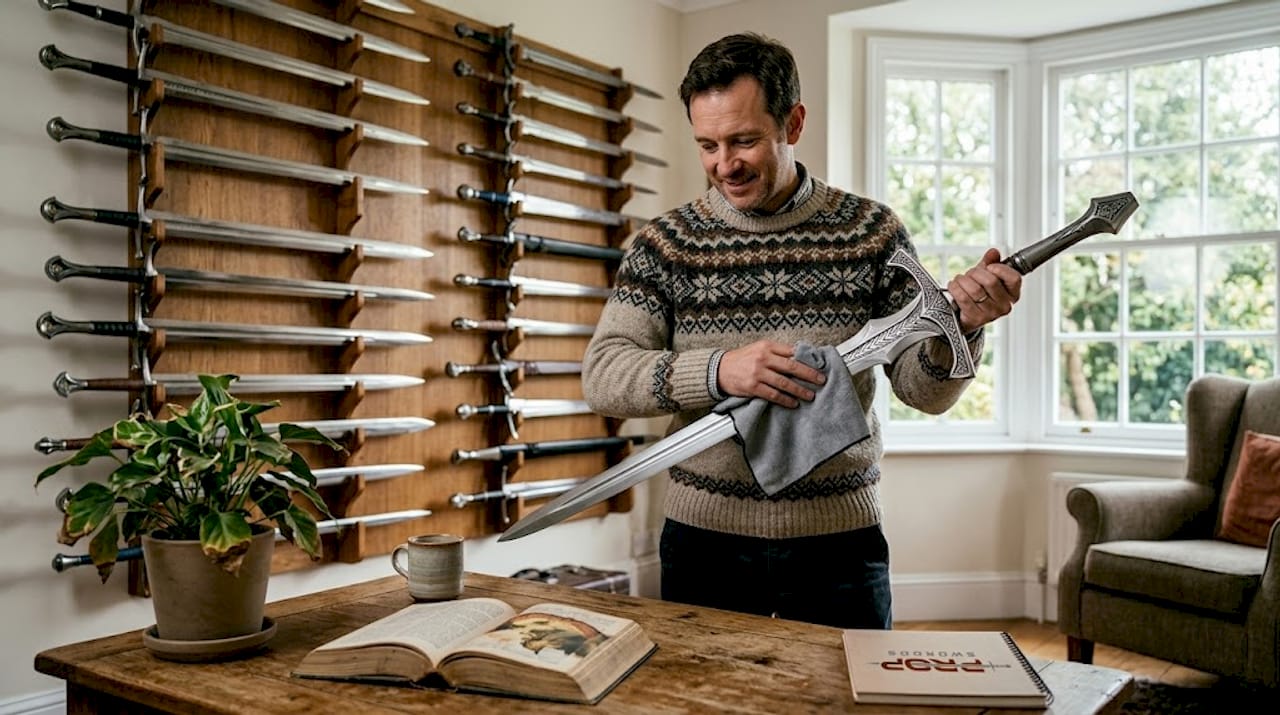
First, decide what your collection is for. If you want pieces you can handle, pose with, or show at events, foam or light alloy swords make more sense. If you want display pieces that hold their value and look stunning on a wall, steel replicas are the right call. Collectors strongly prefer steel for authenticity, and the weight and finish of a real steel blade simply cannot be matched by any synthetic material.
Display setup matters more than most new collectors realize. A poorly mounted sword is both a safety hazard and an eyesore. Here’s what to prioritize:
- Horizontal wall mounts: Ideal for longer blades like greatswords or nodachi replicas. Distribute the weight across two support points.
- Angled display stands: Perfect for katanas and shorter swords, letting the blade angle add visual drama.
- Enclosed cases: Best for high-value pieces, protecting from dust and humidity while keeping the sword visible.
- Lighting: Directional LED lighting from above or below highlights the blade finish and any etched details dramatically.
Pro Tip: Keep steel swords away from exterior walls in humid climates. Temperature fluctuations cause condensation on the blade surface, which accelerates surface rust even on treated steel. A light coat of camellia oil applied every few months is all most display swords need.
For more on getting this right, check out safe sword display tips and the full display guide for collections so your setup looks intentional, not accidental.
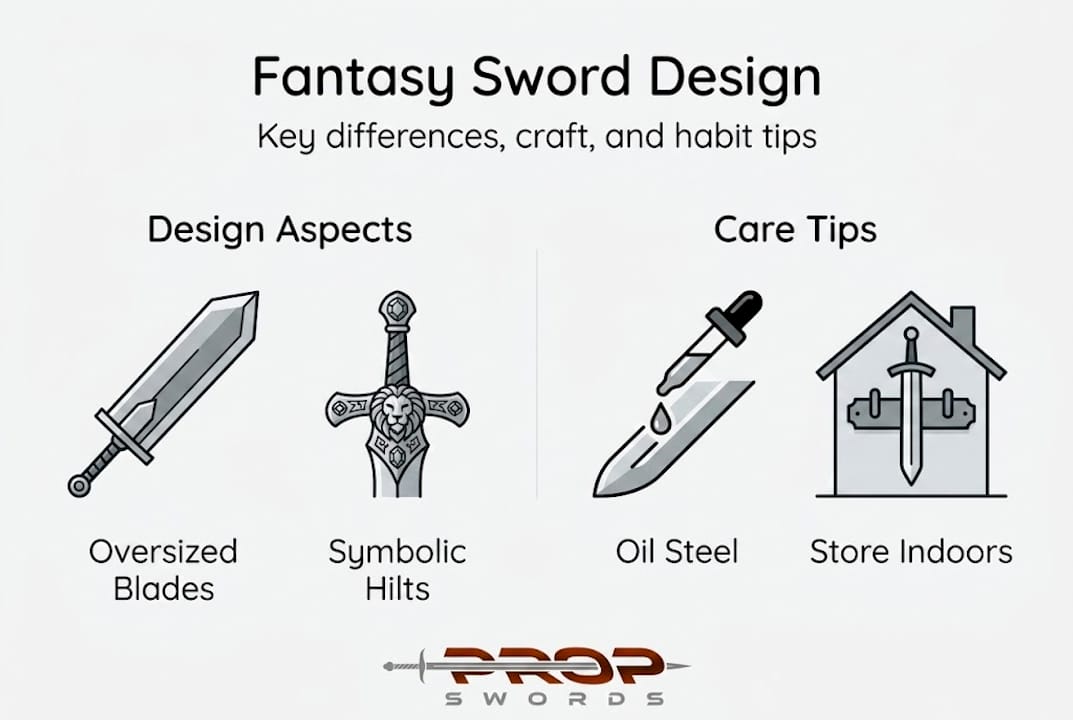
Caring for your collection over time comes down to three simple habits: oil steel blades regularly, store foam pieces away from direct sunlight, and check mounting hardware every six months to make sure nothing has loosened.
A collector’s insight: Why fantasy sword design endures
Here’s an opinion you don’t hear often enough: fantasy swords outlast functional ones in cultural memory not because they’re bigger, but because they carry meaning. A historically accurate arming sword is a beautiful object. But most people can’t tell you why they find it beautiful. Hand someone a replica of Cloud Strife’s Buster Sword, and they can tell you exactly what it means, who wielded it, what it cost the character, and why its impossible size makes emotional sense.
That emotional specificity is what makes fantasy sword design so durable. Every collector who picks up a piece connected to a story they love is doing something that functional swords rarely allow: they’re holding a piece of someone else’s inner world made real. We think that’s worth taking seriously as a reason to collect, not just a sentimental side effect.
The craft element only deepens the appeal. When a smith applies clay-tempering to a Demon Slayer replica to produce a real hamon line, they’re honoring a 1,000-year-old technique in service of a contemporary story. That combination of historical method and modern imagination is rare in any art form. Understanding display swords’ value goes beyond decor. These pieces sit at the intersection of craft, story, and personal identity.
Explore your next fantasy sword
You’ve got the knowledge now: the history, the craft, the symbolism, and the practical side of collecting. The next step is finding the piece that actually belongs in your space or your collection.
At Propswords, we carry a wide range of fantasy sword replicas inspired by anime, movies, and historical weaponry, all built with the detail and quality serious collectors expect. Whether you’re after your first display piece or adding a grail sword to an existing fantasy sword collection, we offer free shipping within the USA and a range of options across steel and cosplay grades. Browse the full catalog and find the blade that speaks to you.
Frequently asked questions
What materials are used in high-quality fantasy sword replicas?
Premium replicas use 1060 or 1095 steel with full tang construction, while cosplay swords often use EVA foam and PVC cores for safe, lightweight handling at events.
Why are fantasy swords often oversized or unusually shaped?
Fantasy design prioritizes symbolism and character identity over realistic combat function, which gives designers freedom to use grand, expressive proportions that communicate personality rather than tactical logic.
How do I safely display a sword in my home?
Use dedicated display racks or wall mounts rated for the sword’s weight, secure all hardware firmly, and choose a location away from high-traffic areas and direct humidity sources.
Can a fantasy sword be functional or is it just for show?
Collector-grade fantasy swords made from quality steel with full tang construction can handle real use, but most are crafted for display or cosplay and are not intended for combat testing.