
Recent Post

Why sword materials matter: collector's guide 2026

Swords in Entertainment: Cultural Symbolism & Fandom

Historical swords checklist: expert criteria for collectors 2026

How to select anime sword gifts for fans and collectors

Why choose historical replicas: tips for collectors

What is historical sword reproduction? A guide for 2026
Leave a comment
Why sword materials matter: collector's guide 2026
Most collectors assume all replica swords are created equal, but the material you choose dramatically impacts authenticity, safety, and long-term value. Whether you’re building a display collection, preparing for your next cosplay event, or seeking historically accurate pieces, understanding sword materials transforms how you select and care for your replicas. This guide breaks down exactly why materials matter and which ones suit your specific needs.
Table of Contents
- Key takeaways
- How sword materials impact authenticity and collector value
- Material considerations for cosplay swords: balance of safety and realism
- Choosing materials for display swords: durability and maintenance needs
- Comparing sword materials: key factors for cosplay, display, and historical replicas
- Explore quality replica swords and materials at Propswords
- FAQ
Key Takeaways
| Point | Details |
|---|---|
| Material shapes authenticity | The material chosen dramatically influences a replica sword’s authenticity and its appeal to collectors. |
| Carbon steel authenticity | Carbon steel offers the most authentic look and allows period accurate finishes when heat treated. |
| Stainless steel tradeoff | Stainless steel provides durability and corrosion resistance but can distract from historical accuracy in some types. |
| Cosplay material choices | Aluminum provides a light weight and realistic metal appearance for cosplay while reinforced plastics and composites enable safe non lethal designs. |
How sword materials impact authenticity and collector value
The materials used in replica swords fundamentally shape both their appearance and collector appeal. Stainless steel, carbon steel, aluminum, and resin each bring distinct characteristics that affect weight distribution, surface finish, and overall durability. These differences matter enormously when you’re aiming for historical accuracy or building a collection that holds value over time.
Carbon steel delivers the most authentic look and feel for historical replicas. Its weight distribution mirrors traditional swords, and it can be heat treated to achieve period-accurate finishes. Collectors seeking pieces that reflect genuine craftsmanship typically prioritize carbon steel for its traditional qualities. The material allows for intricate detailing in the blade, fuller, and tang that synthetic alternatives simply cannot replicate.
Stainless steel offers a middle ground between authenticity and practicality. While slightly lighter than carbon steel, it maintains enough heft to feel substantial. The corrosion resistance makes it ideal for collectors in humid climates or those who handle their pieces regularly. However, purists note that stainless steel’s bright, modern finish can detract from historical accuracy in certain replica types.
Aluminum and resin serve specific niches in the collector market. Aluminum provides lightweight alternatives for large or ceremonial swords where display weight matters. Resin allows for elaborate fantasy designs impossible with metal forging. Both materials excel at capturing fine surface details through molding processes. Their role in collections typically centers on pop culture replicas where imaginative design trumps historical fidelity.
Material choice directly correlates with a sword’s display presence and perceived value. A well-maintained carbon steel piece commands respect in serious collections, while high-quality aluminum replicas find their place in themed displays. Understanding these distinctions helps you build a collection that aligns with your goals, whether that’s historical accuracy, genre-specific themes, or mixed-use versatility.
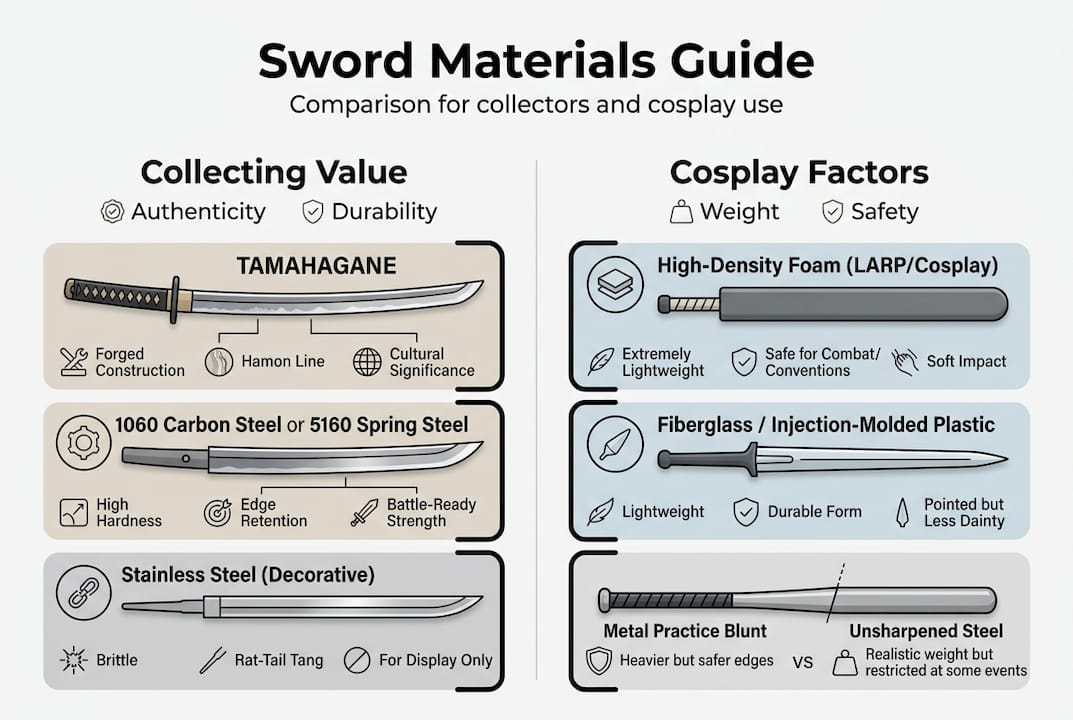
Pro Tip: When evaluating material quality, check the blade’s balance point. Traditional swords balance 2-4 inches from the guard, and quality replicas in authentic materials should approximate this regardless of whether they’re sharpened.
Material considerations for cosplay swords: balance of safety and realism
Cosplay demands a completely different material calculus than display collecting. Choosing cosplay swords requires balancing realistic appearance with non-lethal construction, especially for convention environments with strict prop policies. The right material keeps you comfortable during long wear periods while maintaining the visual impact your costume needs.
Aluminum ranks as the top choice for cosplay swords requiring metal appearance. Its light weight reduces arm fatigue during photo sessions and prevents accidental injuries in crowded spaces. Modern aluminum alloys can be finished to closely mimic steel, and the material machines well for detailed guard work and pommels. Most importantly, aluminum’s softness means any accidental contact causes far less harm than steel alternatives.

Reinforced plastics and composite materials have revolutionized cosplay sword construction. High-density foam cores wrapped in rigid plastic shells deliver impressive realism at minimal weight. These materials allow for elaborate paint finishes that can replicate everything from weathered steel to magical energy effects. The flexibility prevents breakage from drops or impacts that would damage metal props.
Five materials dominate modern cosplay sword construction:
- Aluminum alloys for lightweight metal appearance with good durability
- EVA foam for ultra-safe, highly customizable designs perfect for beginners
- PVC composites offering rigid structure with moderate weight and cost
- Worbla thermoplastic for heat-moldable custom shapes with professional finish potential
- Resin casting for detailed, lightweight replicas of complex fantasy designs
Each material presents trade-offs between realism, safety, and construction difficulty. Aluminum requires metalworking tools but delivers unmatched metal authenticity. Foam offers the safest option with easiest modification but may lack visual weight. PVC and composites split the difference, providing good structure without specialized equipment.
The finish matters as much as the base material. Rough edges on aluminum can catch on costumes or scratch skin. Improperly sealed foam absorbs moisture and degrades. Quality cosplay swords feature smooth, sealed surfaces regardless of underlying material. Check all edges, especially on guards and pommels, before committing to extended wear.
Pro Tip: Test your cosplay sword’s weight by holding it at arm’s length for 30 seconds. If you struggle to maintain position, the material is too heavy for all-day convention wear, regardless of how authentic it looks.
Choosing materials for display swords: durability and maintenance needs
Display swords face different challenges than handled pieces. Displaying swords properly means selecting materials that resist environmental degradation while maintaining their aesthetic appeal over years or decades. The right material choice dramatically reduces maintenance burden and preserves your investment.
Stainless steel dominates the display market for good reason. Its chromium content creates a passive oxide layer that resists corrosion in typical indoor environments. You can mount stainless steel swords in climate-controlled rooms with minimal maintenance beyond occasional dusting. The material maintains its finish without the regular oiling carbon steel demands, making it ideal for collectors who want impressive displays without constant upkeep.
Carbon steel offers superior authenticity but requires committed care. Without protective coatings, carbon steel develops surface rust within days in humid conditions. However, properly maintained carbon steel develops a beautiful patina that enhances historical character. Collectors willing to invest time in maintenance often prefer carbon steel for its traditional appearance and the satisfaction of preservation work.
| Material | Durability Rating | Maintenance Frequency | Relative Cost | Best Display Environment |
|---|---|---|---|---|
| Stainless Steel | Excellent | Every 3-6 months | Medium | Any indoor setting |
| Carbon Steel | Good with care | Monthly minimum | Medium-High | Climate controlled |
| Aluminum | Very Good | Every 6-12 months | Low-Medium | Any indoor setting |
| Coated Resin | Good | Yearly | Low | Away from direct sun |
Maintenance strategies vary dramatically by material. Stainless steel needs only periodic cleaning with mild soap and soft cloths. Carbon steel requires thin oil coats after every handling and humidity monitoring. Aluminum resists corrosion but can develop oxidation that dulls its finish, requiring occasional polishing. Resin pieces need protection from UV exposure that can cause fading or brittleness.
Protective coatings extend the life of display pieces significantly. Renaissance wax provides museum-grade protection for metal surfaces. Clear lacquers seal carbon steel against moisture while preserving its appearance. Even stainless steel benefits from occasional wax application in coastal or humid regions. These treatments create barriers between the sword surface and environmental factors that cause degradation.
Environmental control matters more than material choice for long-term preservation. Maintaining stable humidity between 40-50% prevents both rust formation and desiccation cracking in organic handle materials. Avoiding direct sunlight protects finishes and prevents heat-related warping in composite materials. Position displays away from heating vents and air conditioning units that create localized humidity fluctuations.
Pro Tip: Create a maintenance calendar based on your collection’s materials. Set phone reminders for oiling carbon steel pieces, and photograph your swords periodically to track finish changes that indicate needed care adjustments.
Comparing sword materials: key factors for cosplay, display, and historical replicas
Selecting the right sword material requires weighing multiple factors against your specific needs. Choosing replica swords becomes straightforward once you understand how materials perform across key criteria. This comparison helps you prioritize what matters most for your collection or cosplay goals.
| Material | Weight | Durability | Cost | Historical Accuracy | Best Use Case |
|---|---|---|---|---|---|
| Carbon Steel | Heavy | Excellent with care | High | Highest | Historical replicas, serious collections |
| Stainless Steel | Medium-Heavy | Excellent | Medium | Good | Display pieces, handled replicas |
| Aluminum | Light | Very Good | Low-Medium | Moderate | Cosplay, large decorative pieces |
| Reinforced Plastic | Very Light | Good | Low | Low | Cosplay, fantasy designs |
| Resin | Light | Moderate | Low | Variable | Detailed fantasy pieces, display |
Each material involves inherent trade-offs that no single choice perfectly resolves. Carbon steel delivers unmatched authenticity and traditional feel but demands regular maintenance and higher investment. Stainless steel provides excellent durability with reduced care requirements but sacrifices some historical accuracy. Aluminum and synthetics maximize safety and affordability while accepting compromises in realism and weight.
Budget considerations extend beyond initial purchase price. Carbon steel’s ongoing maintenance costs add up through oils, cleaning supplies, and potential restoration work. Stainless steel and aluminum require minimal ongoing investment. Synthetic materials may need replacement sooner than metal alternatives but cost less to replace. Calculate total ownership cost over your expected display or use period.
Intended use should drive material selection above all other factors. Cosplayers prioritize light weight and safety, making aluminum and reinforced plastics logical choices. Display collectors can embrace heavier materials since handling frequency stays low. Historical reenactors need period-accurate materials regardless of maintenance burden. Fantasy enthusiasts gain freedom to choose based purely on aesthetic preference and budget.
Authenticity expectations vary widely among collectors. Some demand period-accurate materials and construction methods, accepting the care requirements that entails. Others prioritize visual accuracy over material fidelity, happily displaying high-quality aluminum or resin pieces that look right. Neither approach is wrong; clarify your own authenticity standards before selecting materials.
No material suits every need perfectly, and most serious collectors build diverse collections using multiple materials strategically. Your prized historical replicas might be carbon steel, while your cosplay rotation uses aluminum, and your large decorative pieces employ resin. Matching material to purpose creates a versatile collection that serves multiple interests without compromise.
Explore quality replica swords and materials at Propswords
Now that you understand how materials affect authenticity, safety, and maintenance, you’re ready to make informed choices for your collection. Propswords offers an extensive selection of replica swords crafted from materials suited to every need, from historically accurate carbon steel pieces to lightweight cosplay-ready alternatives. Each sword in the collection emphasizes quality craftsmanship and accurate representation of its source material.
Whether you’re building a display collection, preparing for your next convention, or seeking that perfect character replica, Propswords provides options across the full material spectrum. Browse themed collections inspired by anime, movies, and historical periods, all crafted with attention to material quality and detail accuracy. Find the perfect balance of authenticity, durability, and value for your specific collecting or cosplay goals.
FAQ
What is the safest material for cosplay swords?
Lightweight aluminum and reinforced plastics rank as the safest options due to their low weight and inherent bluntness. Foam cores wrapped in rigid plastic shells provide excellent safety while maintaining realistic appearance. These materials significantly reduce injury risk in crowded convention environments compared to steel alternatives.
How should I maintain a carbon steel display sword?
Apply a thin coat of mineral oil or specialized sword oil monthly to prevent rust formation. Store in a climate-controlled environment away from humidity sources and direct sunlight. Clean with soft, lint-free cloths and inspect regularly for early signs of corrosion that require immediate attention.
Can replica sword materials affect cosplay costume comfort?
Absolutely. Heavier materials like steel create arm fatigue and strain during extended wear periods. Lightweight aluminum and synthetic materials dramatically improve comfort without sacrificing visual impact. The sword’s balance point and grip design, both influenced by material choice, directly affect how comfortable it feels during all-day convention wear.
Are display swords suitable for light combat or mock battles?
Most display swords lack the structural integrity and safety features necessary for any combat use, even mock battles. They’re designed for static display with materials and construction optimized for appearance rather than impact resistance. Use purpose-built practice swords or foam weapons specifically designed for safe combat simulation instead.
Does sword material affect resale value for collectors?
Material significantly impacts collector value and resale potential. Carbon steel pieces from reputable makers typically hold value best due to their authenticity and craftsmanship. Well-maintained stainless steel replicas retain good value. Synthetic materials generally depreciate faster unless tied to limited editions or discontinued designs from popular franchises.