
Recent Post

Top 4 best replica swords 2026

Top 6 Medieval Swords for Cosplay Comparison 2026

Famous swords in history: 6 legendary blades explained

Anime sword buying tips for collectors & cosplayers

Step-by-step guide: how to choose the perfect cosplay sword

Sword replicas as décor: 13% home value boost tips
Leave a comment
Step-by-step guide: how to choose the perfect cosplay sword
TL;DR:
- Determine your purpose to prioritize safety, accuracy, or display value when selecting a cosplay sword.
- Choose materials like foam or PVC for safety and convention compliance, avoiding sharp or heavy metals.
- Prioritize safety and rules compliance over perfect accuracy to ensure a positive convention experience.
Picking the right cosplay sword sounds simple until you’re standing at a convention entrance and a staff member turns you away because your blade doesn’t pass the prop check. Thousands of cosplayers face this exact situation every year, caught between wanting a screen-accurate replica and meeting strict event safety rules. Whether you’re suiting up as Ichigo from Bleach, Kirito from Sword Art Online, or a Viking warrior, the sword you carry can make or break your entire look and your day. This guide walks you through every decision point, from defining your purpose to finalizing your purchase, so you arrive prepared and confident.
Table of Contents
- Identify your purpose and requirements
- Evaluate sword materials and build quality
- Check visual accuracy and comfort
- Ensure event compliance and purchase wisely
- Why obsessive accuracy isn’t always best for cosplayers
- Take your next step with trusted cosplay swords
- Frequently asked questions
Key Takeaways
| Point | Details |
|---|---|
| Define your purpose | Know whether you are buying for cosplay, display, or collecting to make the right selection. |
| Choose safe materials | Foam and PVC are event-compliant while steel suits display pieces best. |
| Balance accuracy and comfort | Visual perfection matters, but comfort and maneuverability are equally important. |
| Follow event rules | Check each event’s weapon policy to prevent last-minute surprises or bans. |
Identify your purpose and requirements
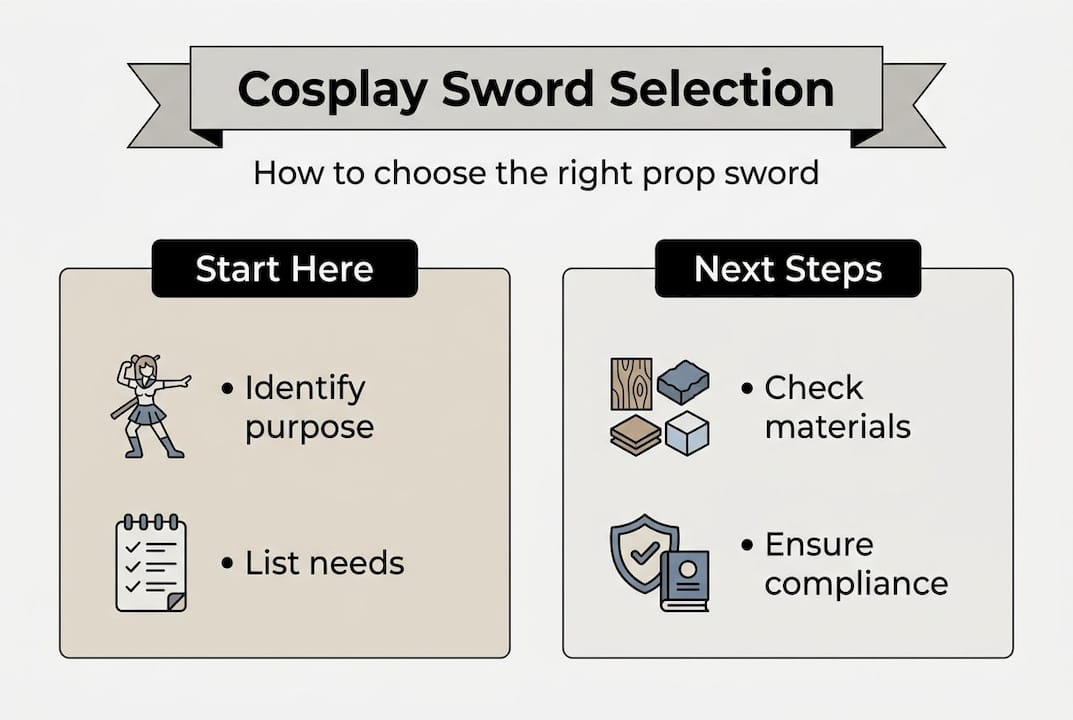
Before you browse a single product listing, you need to answer one question: what is this sword actually for? The answer shapes every choice that follows. Define your purpose early to determine the right balance of weight, safety, and accuracy for your specific situation.
There are three main use cases, and each one pulls you in a different direction:
- Cosplay at events: Lightweight, safety-compliant, and realistic enough to photograph well. You’ll be carrying this for hours, so comfort is non-negotiable.
- Home display: Visual accuracy and craftsmanship take priority. Weight and safety rules matter less here, so you can invest in more detailed metalwork.
- Collecting: Durability, authenticity, and brand reputation drive the decision. Collectors often want pieces that hold value over time.
Here’s a quick comparison to help you sort your priorities:
| Use case | Top priority | Secondary priority | What to skip |
|---|---|---|---|
| Convention cosplay | Safety compliance | Lightweight build | Sharp edges, heavy steel |
| Home display | Visual accuracy | Craftsmanship detail | Foam or soft materials |
| Collecting | Authenticity | Brand reputation | Low-grade alloys |
Making this call early prevents costly mistakes. A collector-grade carbon steel sword looks stunning on a shelf but will get you turned away at the door of most conventions. Conversely, a foam prop built for events won’t satisfy a collector who wants something that lasts decades.
Pro Tip: Write down your top three requirements before you search. If “passes prop check” isn’t on that list and you plan to attend events, add it immediately. You can learn more about material trade-offs in this sword materials guide to sharpen your decision before you spend a dollar.
Evaluate sword materials and build quality
With your purpose defined, the next step is comparing the specific materials and sword builds available. The material determines how the sword feels, how long it lasts, and whether you’ll even be allowed to carry it into an event.
Material selection is one of the most critical steps: foam and plastic work best for cosplay safety, stainless steel suits display durability, and carbon steel delivers an authentic feel but demands regular maintenance.
Here’s how the main options stack up:
| Material | Best for | Weight | Convention legal | Maintenance |
|---|---|---|---|---|
| Foam | Active cosplay | Very light | Almost always yes | Minimal |
| PVC/plastic | Cosplay, casual display | Light | Usually yes | Low |
| Stainless steel | Display, decorative | Heavy | Rarely | Low to moderate |
| Carbon steel | Collecting, martial arts | Heavy | Almost never | High |
A few things worth knowing before you commit:
- Foam swords can be surprisingly detailed. Modern EVA foam construction allows for painted finishes, textured grips, and accurate proportions that photograph beautifully.
- Stainless steel holds its shine without constant polishing, making it ideal for display pieces you want to look great with minimal effort.
- Carbon steel is the most realistic option but requires oiling, proper storage, and careful handling to prevent rust and edge damage.
- PVC sits in a useful middle ground, offering more rigidity than foam while staying light enough for all-day wear.
Understand why material matters before you finalize any purchase, because the wrong choice can cost you both money and your spot at the event.
Pro Tip: Many cosplayers get turned away at conventions specifically because they chose a stainless steel sword without checking the event’s prop weapon policy first. Always verify the rules before selecting your material.
Check visual accuracy and comfort
Material and build set your foundation, but visual accuracy and user comfort make the difference between a good-enough prop and a standout cosplay. Both factors deserve equal attention, and most people underestimate the second one.
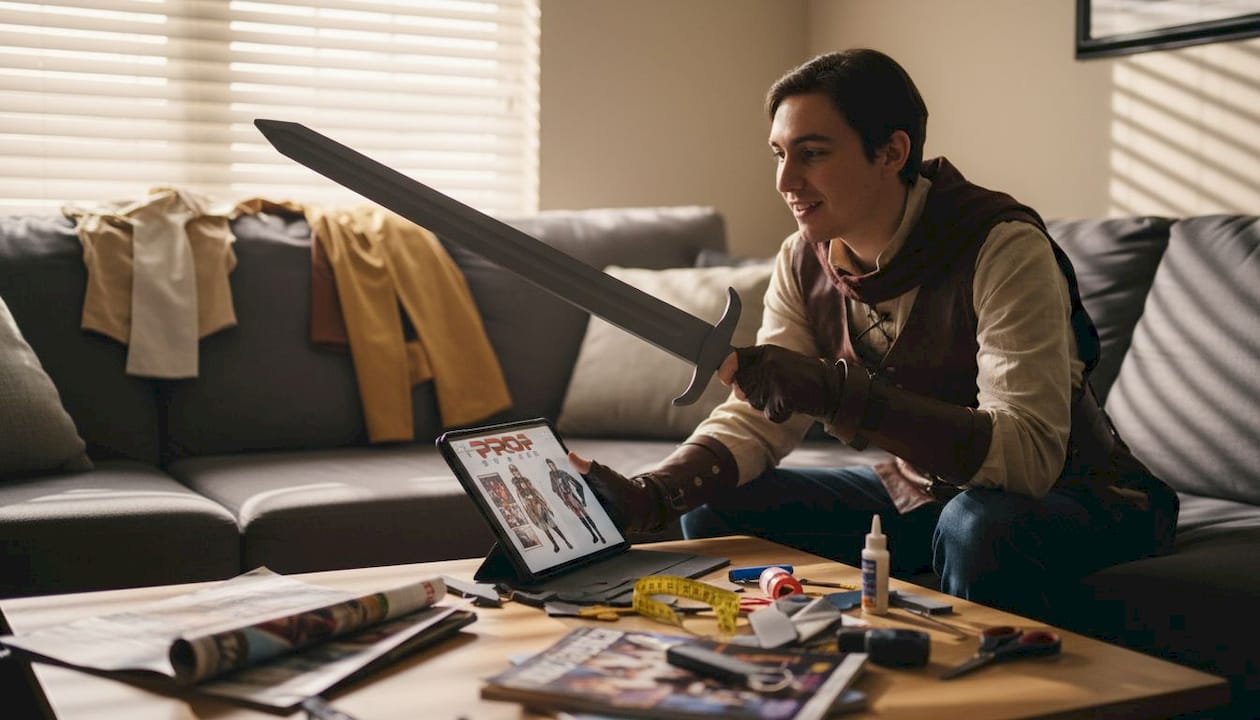
For visual accuracy, start with reference images pulled directly from the source material. Side-by-side screenshots, official art books, and fan wikis are your best tools. When inspecting craftsmanship details, compare paint quality, fittings, proportions, and for metal swords, check whether the blade is full tang, meaning the metal runs the full length into the handle for structural integrity.
Here’s a practical checklist for assessing accuracy:
- Pull at least three reference images from different angles.
- Compare blade length and width against listed product dimensions.
- Check the guard (tsuba), grip wrap, and pommel details closely.
- Look for customer photos in reviews, not just the official product shots.
- Verify that paint or finish colors match the source material under natural light.
Comfort is where many cosplayers make their biggest mistake. Weight, balance, and size directly affect how you feel after carrying a sword for six to eight hours at a convention. A blade that feels fine in your hand for five minutes can become exhausting by noon.
“The most accurate sword in the room means nothing if you’re too tired to pose for photos by 2 PM.”
For long events, foam and lightweight PVC replicas win every time on comfort. If accuracy is critical, look for authenticating replica swords that use lighter alloys or hollow construction to reduce fatigue. You might also explore why display replicas are engineered differently from cosplay props, since the design goals are fundamentally different.
Ensure event compliance and purchase wisely
No sword is worth the risk of event disqualification or wasted money. Here’s how to avoid the biggest pitfalls at the final selection and purchase stage.
Start with the event rules. Every convention publishes a prop weapon policy, and they vary widely. Some allow blunted metal swords with peace-bonding (a visible tie that prevents drawing). Others permit only foam and PVC. A few ban all replica weapons entirely. Read event rules and legal requirements before you buy anything, not after.
Follow these steps to protect your purchase and your event access:
- Download or screenshot the event’s prop weapon policy at least two weeks before the convention.
- Contact the event organizer directly if any rule is unclear.
- Only buy from sellers with verified customer reviews and a clear return or exchange policy.
- For metal swords, confirm the blade is unsharpened and check whether the seller provides a certificate of bluntness or a product spec sheet.
- Use a buying checklist to verify every item before completing your order.
Key things to look for in a reputable seller:
- Detailed product photos showing multiple angles
- Listed blade material and dimensions
- Transparent return policy
- Real customer reviews with photos
- Responsive customer support
The numbers back up the safer choice: foam and PVC swords are 40% safer based on convention prop failure data, making them the smart default for anyone attending events. For additional guidance, reputable sword sellers publish independent reviews and comparisons that can help you verify quality before committing.
Why obsessive accuracy isn’t always best for cosplayers
Having mapped out the step-by-step process, here’s a lesson many cosplayers learn the hard way: chasing 100% screen accuracy is often the fastest path to a bad convention experience.
The cosplay community celebrates detail, and that’s genuinely wonderful. But there’s a point where the pursuit of perfection starts working against you. A carbon steel replica that matches every curve of your favorite character’s blade is impressive. It’s also heavy, almost certainly not event-legal, and a liability if something goes wrong in a crowded hall.
Event organizers are not judging your sword’s accuracy. They’re checking whether it’s safe and whether it follows the rules. A well-made foam replica that passes inspection and holds up for eight hours of photos will always outperform a museum-quality steel piece sitting in your hotel room because it didn’t clear the prop check.
Prioritizing safety and compliance over pure realism is not a compromise. It’s the smarter strategy. The cosplayers who consistently get the best photos and the most positive event experiences are the ones carrying safer cosplay swords that were built for exactly this purpose. Accuracy matters, but it should never come at the cost of your comfort, your safety, or your ability to actually attend the event.
Take your next step with trusted cosplay swords
You now have a clear, step-by-step framework for choosing a cosplay sword that looks great, passes event checks, and feels comfortable all day long. The next move is finding the right piece.
Propswords offers a curated selection of event-compliant replica swords inspired by anime, movies, and historical themes, all built with cosplayers and collectors in mind. Free shipping within the USA makes it even easier to get the right sword to your door before your next event. If you want to go deeper before buying, explore more on choosing swords for additional guidance on materials, accuracy, and seller vetting. The right sword is out there, and now you know exactly how to find it.
Frequently asked questions
What sword material is best for convention cosplay?
Foam and PVC are the safest and most widely accepted materials at conventions, offering lightweight comfort and broad compliance with prop weapon policies.
Is a stainless steel sword allowed at most events?
Stainless steel swords are generally not permitted for active cosplay at conventions unless they are fully unsharpened and pass an on-site prop inspection, which varies by event.
How can I verify a replica sword’s authenticity before buying?
Compare product photos to reference images from the source material, check customer reviews for real-world photos, and confirm key details like blade material and full tang construction.
Are all anime sword replicas safe for children?
No. Only foam or soft plastic replicas with rounded edges are appropriate for children. Metal versions pose serious safety risks and should never be used by young fans.