
Recent Post

Famous swords in history: 6 legendary blades explained

Anime sword buying tips for collectors & cosplayers

Step-by-step guide: how to choose the perfect cosplay sword

Sword replicas as décor: 13% home value boost tips

Why collect anime swords? Value, joy, and fandom

Replica sword maintenance guide: keep your collection pristine
Leave a comment
Famous swords in history: 6 legendary blades explained
TL;DR:
- Legendary swords become cultural icons through historical significance, myth, craftsmanship, and mystery.
- Iconic blades like Excalibur and Honjo Masamune hold enduring symbolic and cultural value.
- The appeal of swords lies in their stories, craftsmanship, and connection to larger-than-life legends.
Separating myth from fact is half the fun when it comes to legendary swords. These blades have shaped kingdoms, defined heroes, and sparked arguments among historians for centuries. Some are locked in museum vaults, others are hidden from public view entirely, and a few may exist only in the stories we tell. Whether you are drawn to the romance of Arthurian legend, the precision of Japanese swordmaking, or the archaeological thrill of a 2,500-year-old blade that still holds an edge, the world of famous swords rewards curiosity at every turn. This article walks through the criteria that make a sword legendary, profiles six of the most iconic blades ever known, and connects their stories to the collectors and fans who keep them alive today.
Table of Contents
- How are famous swords chosen? Criteria that shape legends
- Legendary swords: The stories behind the blades
- Side by side: Comparing the world’s most famous swords
- Historic blades in pop culture and collecting
- Why authenticity (and myth) matter for sword enthusiasts
- Find your own legendary sword
- Frequently asked questions
Key Takeaways
| Point | Details |
|---|---|
| Myth and history merge | Famous swords often balance real artifacts with powerful legends that endure through centuries. |
| Unique features matter | Distinct craftsmanship, preservation, or legend can make a sword stand out and inspire collectors. |
| Modern connections | Iconic swords shape pop culture and guide enthusiasts in collecting high-quality replicas. |
| Authenticity debates | Discussions over a sword’s historical reality fuel fascination and add value to their stories. |
How are famous swords chosen? Criteria that shape legends
Not every old sword becomes a legend. The ones that do tend to check several boxes at once: they appear in pivotal historical moments, carry deep cultural symbolism, display extraordinary craftsmanship, or become wrapped in myths that outlast the blade itself. Sometimes all four.
Think about what separates a random medieval longsword from Excalibur. One is a tool. The other is a symbol of divine right, political legitimacy, and national identity. That symbolic weight is what transforms steel into story.
Here are the main factors that push a sword from obscure artifact to cultural icon:
- Historical significance: The sword was present at a defining moment in history, such as a coronation, a battle, or a dynasty’s rise.
- Mythological weight: Legends, religious texts, or folklore attach meaning to the blade that goes far beyond its physical form.
- Technical mastery: The sword demonstrates metallurgical or artistic skill so advanced it still impresses experts today.
- Mystery or rarity: Lost swords, hidden swords, and swords whose authenticity is debated tend to fascinate people far longer than those sitting in plain sight.
- Pop culture reach: Swords that appear in films, games, and literature gain new audiences with every generation.
As legendary swords research makes clear, real artifacts like the Sword of Goujian showcase advanced metallurgy, while legends like Excalibur emphasize symbolism over historicity. Both matter. Neither cancels the other out.
If you want to understand what separates a replica worth owning from a generic wall-hanger, reading about historical sword reproduction gives you a solid foundation. And for anyone serious about the hobby, sword craftsmanship and collecting breaks down the details that matter most.
Pro Tip: Look for swords that influenced both their era and pop culture. These tend to endure in memory long after their time because they carry meaning on multiple levels at once.
Legendary swords: The stories behind the blades
Six swords stand out above the rest when you look at history, myth, and cultural staying power together. Each one has a story worth knowing.
-
Excalibur: The sword of King Arthur is arguably the most recognized blade in Western culture. Excalibur symbolizes rightful kingship, drawing on Celtic mythology and possibly real swords of early medieval Britain. Whether it was pulled from a stone or given by the Lady of the Lake depends on which version of the legend you follow.
-
Honjo Masamune: Forged in 13th to 14th century Japan by master swordsmith Masamune, this blade is considered the pinnacle of Japanese sword craft. The Honjo Masamune was lost after WWII and has not been seen since, making it one of the great unsolved mysteries of the art world.
-
Sword of Goujian: Found in a tomb in China in 1965, this bronze sword dates to 475 to 221 BC. Despite being over 2,000 years old, it was found perfectly preserved and still cuts paper. Its resistance to corrosion still puzzles researchers.
-
Joyeuse: The ceremonial sword of Charlemagne, kept at the Louvre in Paris and used in French royal coronations for centuries. Its name means “joyful” in French.
-
Kusanagi-no-Tsurugi: One of Japan’s Three Imperial Regalia, this sword is said to have been found inside an eight-headed serpent. It has never been shown to the public.
-
Wallace Sword: Attributed to Scottish hero William Wallace, this two-handed sword measures over five feet in length and is displayed at Stirling Castle in Scotland.
Pro Tip: Some legendary swords, like Kusanagi-no-Tsurugi, have never been publicly displayed. That invisibility is a feature, not a flaw. It keeps the mystery alive and the legend growing.
If you want to see how these stories translate into physical form, browsing replica famous swords shows you what modern craftsmanship can do with centuries-old designs. For deeper inspiration, the guide to iconic sword replicas is worth your time.
Side by side: Comparing the world’s most famous swords
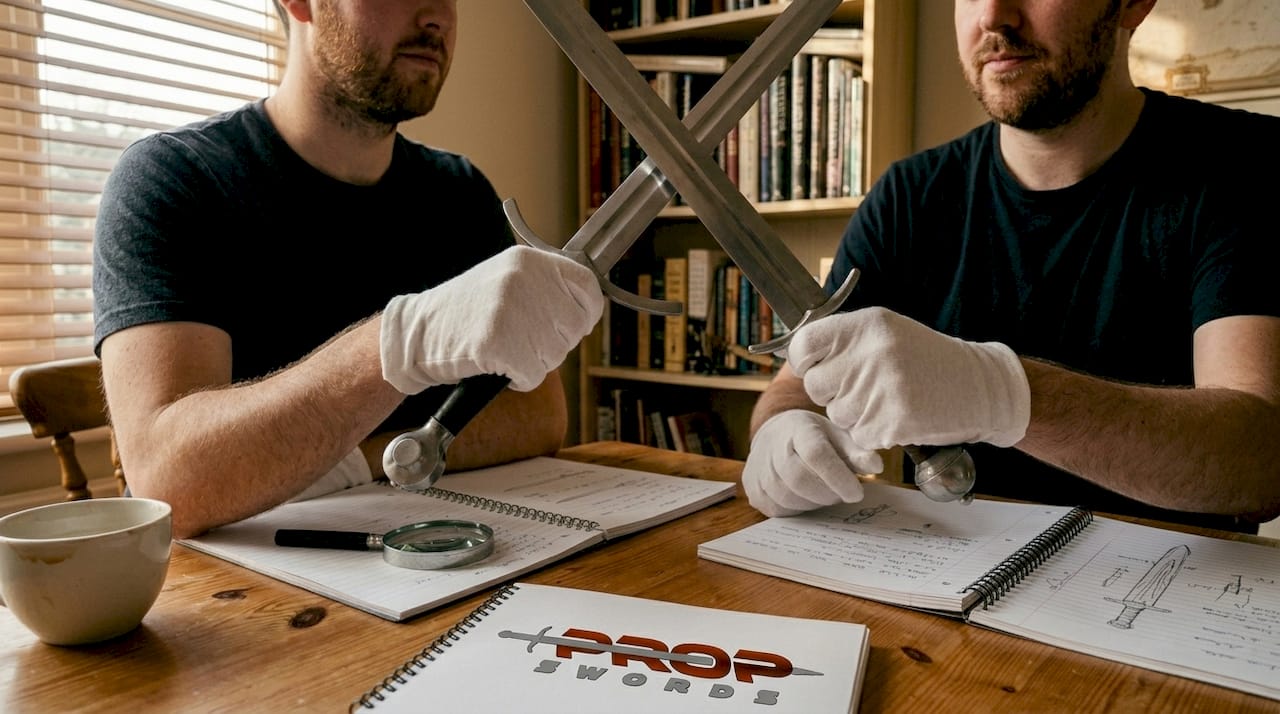
Seeing these swords next to each other reveals just how different legendary blades can be in origin, purpose, and fate.
| Sword | Era | Region | Approx. length | Material | Current status |
|---|---|---|---|---|---|
| Excalibur | Medieval legend | Britain | Unknown | Unknown | Mythological |
| Honjo Masamune | 13th to 14th century | Japan | ~29 inches | Tamahagane steel | Lost since 1945 |
| Sword of Goujian | 475 to 221 BC | China | ~20 inches | Bronze alloy | Museum, Hubei |
| Joyeuse | 9th to 13th century | France | ~32 inches | Steel | Louvre, Paris |
| Kusanagi-no-Tsurugi | Ancient legend | Japan | Unknown | Unknown | Hidden, Nagoya |
| Wallace Sword | Late 13th century | Scotland | ~66 inches | Steel | Stirling Castle |
Several of these swords remain shrouded in debate or mystery:
- The authenticity of Joyeuse is debated, with scholars noting the current blade is likely a composite assembled over several centuries.
- Kusanagi-no-Tsurugi is not shown publicly, meaning no independent verification of its existence or condition has ever been made.
- Excalibur has no confirmed physical form, existing entirely within the realm of legend and literary tradition.
- The Wallace Sword’s connection to William Wallace is based on tradition rather than documented provenance.
“The line between myth and reality is exactly where swords become most powerful. A blade that might be legendary carries more weight than one that simply is.” — The Collector, on legendary swords
For collectors trying to make sense of these differences in practical terms, the breakdown on how to compare sword replicas by weight and length is genuinely useful. And if you want a structured approach to evaluating any blade, the sword checklist for collectors covers the criteria experts actually use.
Historic blades in pop culture and collecting
Legendary swords do not stay in museums or myths. They show up in blockbuster films, video games, tabletop campaigns, and living room display cases around the world.
Excalibur alone has appeared in dozens of films and hundreds of novels. The Wallace Sword is known for its size and intimidation factor, which made it a natural fit for the dramatic storytelling in Braveheart. Fantasy swords in games and films often draw directly from these real legends, borrowing their visual language and symbolic power.
For collectors and cosplayers, here is what tends to drive interest in a particular sword:
- Iconic design: Distinctive shape, guard style, or blade profile that is immediately recognizable.
- Legendary backstory: A sword with a story attached to it feels worth displaying. It starts conversations.
- Craftsmanship detail: Accurate etchings, period-correct fittings, and quality materials signal that a replica is worth owning.
- Cultural connection: Swords tied to specific cultures, like Japanese katanas or Viking longswords, attract fans of those traditions.
- Screen or game presence: A sword that appeared in a beloved film or game carries emotional weight for fans.
Owning a well-made replica is not just about decoration. It is about holding something that connects you to a story larger than yourself. The emotional and social value of displaying replica swords in a home is something collectors talk about constantly, and for good reason.
Pro Tip: High-quality replicas often use advanced steel alloys and hand-finishing techniques that bring them surprisingly close to the originals in feel and appearance. Understanding sword materials for collectors helps you spot the difference between a display piece and a genuine tribute to the craft.
Why authenticity (and myth) matter for sword enthusiasts
Here is the uncomfortable truth that most sword content skips over: the obsession with “real” versus “fake” misses the point entirely.
Conventional wisdom says only provably authentic swords deserve serious attention. But collectors prize swords for their blend of legend and reality, not just documented provenance. The Honjo Masamune is lost. Nobody alive has seen it. Yet it is one of the most revered swords in the world. Why? Because the story is real, even if the blade is out of reach.
Modern reproductions tap into exactly the same human impulse that made ancient legends stick. People want meaning. They want connection to something larger than their daily routine. A sword on your wall is not just steel. It is a statement about what you value, what stories you carry, and what traditions you want to keep alive.
The best collectors we have seen understand this intuitively. They do not just ask “is this accurate?” They ask “does this blade honor the story it represents?” That is a more interesting question, and it leads to more interesting collections.
If you want to build that kind of collection with confidence, learning how to authenticate replica swords gives you the tools to evaluate what you are buying with real knowledge behind your decisions.
Find your own legendary sword
Every sword in this article started as someone’s idea of perfection, whether that was a Japanese swordsmith pushing the limits of tamahagane steel or a Celtic storyteller imagining a blade worthy of a king. That pursuit of something meaningful and beautifully made is exactly what drives the best collectors today.
At Propswords, we carry a wide range of replica swords inspired by the legends, cultures, and stories covered here. From Arthurian designs to Japanese katanas and Viking blades, every piece is built for collectors and fans who care about the craft. Browse our replica swords for collectors and find the blade that speaks to your story. Free shipping within the USA on all orders.
Frequently asked questions
Which is the most famous sword in history?
Excalibur is the legendary sword of King Arthur and is arguably the most recognized blade in the world, appearing across myth, literature, and film for over a thousand years.
Is the Honjo Masamune lost forever?
The Honjo Masamune was lost after WWII and its current location remains unknown, making it one of the most sought-after missing artifacts in Japanese cultural history.
What makes the Sword of Goujian unique?
The Sword of Goujian was found perfectly preserved after more than 2,000 years underground and can still cut paper, a feat of ancient metallurgy that researchers have yet to fully explain.
Can you see any of these famous swords today?
Yes, some are on public display. The Wallace Sword is at Stirling Castle and Joyeuse is at the Louvre, but Kusanagi-no-Tsurugi is not shown publicly and Excalibur exists only in legend.
Why are legendary swords important today?
Legendary swords remain icons because they carry stories, cultural identity, and craftsmanship traditions that resonate with historians, collectors, cosplayers, and pop culture fans across every generation.