
Recent Post

Step-by-step guide: how to choose the perfect cosplay sword

Sword replicas as décor: 13% home value boost tips

Why collect anime swords? Value, joy, and fandom

Replica sword maintenance guide: keep your collection pristine

The ultimate movie sword checklist for collectors

Iconic anime swords: history, legends, and collector insights
Leave a comment

Movie Sword Replicas Explained: Quality, Types, and Safety
Choosing the perfect movie sword replica goes far beyond picking a cool prop from your favorite film or Japanese animation. For collectors and cosplayers worldwide, these pieces represent far more than decoration—they are tangible connections to stories and characters that matter deeply. Quality matters, from the authentic curve of an anime katana to the weight of a fantasy greatsword, ensuring every detail reflects the original design. Whether you seek a centerpiece for your display or the finishing touch for your next event, understanding what makes a replica truly exceptional helps you invest with confidence.
Table of Contents
- Defining Movie Sword Replicas And Their Appeal
- Key Types Of Movie Sword Replicas
- Materials And Craftsmanship Explained
- Legal Restrictions And Safety Guidelines
- Choosing The Best Replica For Your Needs
Key Takeaways
| Point | Details |
|---|---|
| Quality Matters | Invest in high-quality materials and craftsmanship to ensure your replica maintains its visual appeal and durability over time. |
| Choose Wisely | Identify the primary use case for your sword—whether for display, cosplay, or functional use—as this informs your purchasing decision. |
| Understand Regulations | Familiarize yourself with local laws regarding the ownership and transport of replica swords to avoid legal issues. |
| Research Before Purchase | Thoroughly compare models, materials, and reviews to find the best replica that suits your preferences and requirements. |
Defining Movie Sword Replicas and Their Appeal
Movie sword replicas are detailed reproductions of famous blades featured in films, television series, and streaming shows that have captured audiences worldwide. These aren’t cheap knock-offs or toy-like props, but rather authentic-looking recreations crafted with genuine attention to detail. They serve multiple purposes depending on who owns them: collectors display them as centerpieces in curated collections, cosplayers use them to complete character costumes at conventions and events, and enthusiasts simply appreciate them as functional art pieces that bring their favorite on-screen moments into the real world.
What makes these replicas so compelling? They’re more than just swords—they’re tangible connections to stories and characters you care about. When you hold a replica of a legendary blade from your favorite anime or film, you’re holding a piece of that fictional world. The appeal runs deeper than surface-level fandom. Movie swords connect fans to characters and stories through craftsmanship that reflects the original designs with remarkable accuracy. Whether it’s the elegant curve of a katana from an anime series or the imposing presence of a fantasy warrior’s greatsword, these replicas capture the essence of what made that weapon iconic on screen.
The collector market for movie sword replicas has grown substantially because these pieces offer something traditional weaponry collectibles often don’t: pop culture significance combined with artistic value. Consider what separates a quality replica from a disappointing one:
- Visual accuracy: Blade shape, curve, and proportions match the original design
- Material quality: Steel construction or high-grade resin that looks and feels substantial
- Handle craftsmanship: Wrapped grips, guards, and pommels that reflect authentic details
- Overall presentation: Proper balance, weight distribution, and aesthetic appeal
- Display readiness: Comes ready to showcase without additional work or modifications
These replicas appeal to a diverse audience. Anime fans seek swords from their favorite series. Movie enthusiasts want blades wielded by iconic characters. History buffs appreciate replicas that blend historical accuracy with fantasy design. Cosplayers need functional props that photograph well and withstand convention wear. Artists and filmmakers source replicas for their own projects. What ties them together is a shared appreciation for quality craftsmanship and authentic representation of designs that exist only on screen.
The beauty of owning a movie sword replica is that it transforms passive fandom into active engagement. You’re not just watching a character wield that blade anymore—you’re holding it, feeling its weight, understanding the design choices that made it so visually compelling. This tangible connection to fictional worlds resonates strongly with collectors and cosplayers who view these replicas as investment pieces in their hobbies and passions.
Movie sword replicas bridge the gap between fiction and reality, transforming beloved on-screen designs into collectible pieces you can actually own and display.
The market continues to evolve as manufacturers recognize the demand for higher quality replicas. From ornate anime swords with intricate tsuba designs to movie blades that capture every detail of their cinematic counterparts, the variety ensures that whether you’re drawn to fantasy epics, historical adaptations, or Japanese animation, there’s a replica that speaks to your specific interests.
Pro tip: Before investing in a replica, research the specific sword’s design from the source material, check product photos from multiple angles, and read reviews from other collectors to ensure the craftsmanship matches your expectations and budget.
Key Types of Movie Sword Replicas
Movie sword replicas fall into distinct categories based on their intended purpose and construction approach. Understanding these types helps you choose the right replica for your specific needs, whether you’re building a display collection, preparing for a convention costume, or seeking a functional piece. The main distinction comes down to a fundamental question: do you want something that looks incredible on a shelf, or something that functions and performs like the real deal?

The primary divide is between display replicas and functional replicas. Display replicas prioritize visual accuracy above all else, capturing every detail that makes the sword iconic on screen. These feature accurate blade curves, precise handle wrapping, detailed guards, and authentic finishes that photograph beautifully. They’re engineered for wall mounts or display stands, using materials optimized for appearance rather than durability under stress. If you’re a collector who wants your favorite anime katana or movie greatsword to look absolutely perfect next to other pieces in your collection, display replicas are your answer. Conversely, battle-ready replicas aim to replicate swords with correct materials and construction, meaning they’re built with structural integrity in mind. These swords can actually be handled, swung, and used for light sparring or reenactment work—though this applies more to historical weapon replicas than modern movie sword replicas.
Within the movie sword category specifically, you’ll encounter several specialized types:
- Anime sword replicas: Swords from Japanese animation featuring curved blades, ornate tsuba designs, and wrapped handles. These range from simple designs to incredibly intricate pieces with detailed fittings.
- Western fantasy movie replicas: Epic blades from fantasy films and series, often larger greatswords or distinctive broadswords with complex blade patterns and dramatic guards.
- Historical-inspired replicas: Swords blending historical accuracy with fantasy aesthetics, like Vikings series weapons or Game of Thrones-style blades that reference real medieval designs while adding fictional elements.
- Character-signature swords: Replicas of specific legendary weapons wielded by iconic characters, instantly recognizable to fans of particular franchises.
- Licensed vs. unlicensed replicas: Some replicas are officially licensed from the studios that created the films, while others are inspired by designs without official endorsement.
The material composition varies significantly between types. Display replicas often use stainless steel for the blade (which resists corrosion but won’t hold a sharp edge), aluminum handles, and resin for decorative elements. Higher-end display pieces might feature carbon steel blades and genuine leather wrapping. Functional replicas, when applicable to movie swords, typically use high-carbon or spring steel for the blade to provide flexibility and durability. Handle materials range from wood and leather in premium pieces to synthetic materials in mid-range options.
Here’s a quick guide to the main categories of movie sword replicas and their typical uses:
| Category | Typical Buyer | Notable Features | Common Use Case |
|---|---|---|---|
| Anime Swords | Anime fans, cosplayers | Curved blades, ornate tsuba | Convention costumes |
| Fantasy Movie Blades | Movie enthusiasts | Large size, dramatic guards | Wall display, collections |
| Historical-Fantasy | History buffs | Medieval-inspired designs | Reenactment, display |
| Character Signature | Franchise collectors | Unique to each character | Investment, fandom focus |
| Hybrid Replicas | Cosplayers, artists | Mix of accuracy/durability | Practical wear, photo ops |
Cosplayers face a unique consideration because they need replicas that are both visually accurate and practical for wear. A costume sword must be lightweight enough to carry all day, secure enough not to shift during movement, and durable enough to survive being jostled in convention crowds. This explains why many cosplayers opt for hybrid replicas—pieces that balance visual accuracy with practical functionality. These aren’t battle-ready, but they’re constructed to withstand the demands of active cosplay.
The type of replica you choose depends entirely on your use case: display collectors want visual perfection, cosplayers need durability and wearability, and enthusiasts seeking functionality prioritize construction quality over appearance alone.
Pricing correlates directly with type and quality. Basic display replicas start around $30-50 for lighter anime swords, mid-range pieces run $100-300 with better materials and detailing, while premium display or functional replicas can exceed $500. Licensed replicas typically cost more than unlicensed alternatives because of royalty agreements and official design rights.
Choosing the right type means being honest about what you’ll actually do with the sword. Will it live permanently on your wall? Will you carry it to conventions? Do you want to handle it frequently? These questions drive everything from material selection to construction methods. A sword built for display might look identical to a functional replica but will disappoint you if you expect to move it around regularly.
Pro tip: Check product photos for specific material listings and weight specifications before purchasing—display replicas often list blade material as “stainless steel” while functional pieces specify “high-carbon steel,” and knowing this detail prevents buying the wrong type for your intended use.
Materials and Craftsmanship Explained
The difference between a disappointing replica and a treasured centerpiece comes down to two critical factors: the materials used and the skill applied during construction. These two elements work together to determine whether your sword will maintain its beauty for decades or deteriorate within months. Understanding what separates quality craftsmanship from shortcuts helps you make informed decisions when investing in replicas, especially when prices can range dramatically for seemingly similar products.
Material selection forms the foundation of any quality replica. High-carbon steel stands out as the gold standard for authentic sword replicas because it balances durability, weight, and aesthetic accuracy. High-carbon steel with appropriate tempering provides durability and realistic weight, making it the choice for replicas that will be handled, displayed prominently, or used in staged combat. Stainless steel, by contrast, is cheaper and resists corrosion beautifully, but it won’t achieve the same visual patina or feel as authentic blades. Many budget replicas use stainless steel blades, and while they look acceptable initially, they feel noticeably lighter and lack the presence of higher-quality pieces.
The tang—the metal extension that runs through the handle—reveals manufacturer commitment to quality. A full tang means the steel runs completely from blade tip through the pommel, creating exceptional structural integrity and proper weight distribution. Partial tangs, where the steel only extends partway into the handle, represent cost-cutting that compromises both durability and authenticity. When you hold a full-tang replica, you immediately feel the difference. The balance feels right. The handle feels substantial. Lesser replicas with partial tangs often feel flimsy by comparison, with handles that rattle or bend under pressure.
Handle materials deserve careful consideration. Premium replicas feature genuine leather wrapping over wood or ray skin (same material samurai used historically), while mid-range options use synthetic leather or vinyl. The guard, or tsuba on Japanese swords, should be cast or forged from appropriate metals rather than stamped thin versions. Pommels should be solid and securely fastened, not glued on. These details matter because they’re where your hands interact with the piece most frequently.
Compare the most common materials used in replica swords and their advantages:
| Material | Durability | Visual Appeal | Ideal For |
|---|---|---|---|
| Stainless Steel | Moderate, does not corrode | Shiny, less authentic | Display-only replicas |
| High-Carbon Steel | High, realistic patina | Authentic, true weight | Functional replicas |
| Resin | Low, mainly decorative | Detailed, lightweight | Ornate anime swords |
| Aluminum | Light, medium durability | Easy to handle, less flashy | Cosplay props |
| Leather/Wood | High (handle only) | Comfortable grip, classic | Premium replicas |
Craftsmanship extends beyond materials into execution:
- Blade finishing: Quality replicas feature hand-finished blades with appropriate patina, not factory-generic glossy surfaces
- Heat treatment: Proper tempering ensures the steel has the right hardness-to-flexibility ratio without becoming brittle
- Assembly precision: Blades should be perfectly centered in the handle, guards should sit flush, no gaps or shifting
- Detail accuracy: Engravings, etchings, and decorative elements should be crisp and deliberate, not rushed or sloppy
- Weight distribution: The balance point should feel authentic to the original weapon design
Maker reputation carries substantial weight when evaluating craftsmanship. Established manufacturers have built their reputation through consistency and quality control, which means they’re less likely to use compromised materials or rushed construction methods. Newer or smaller makers sometimes produce exceptional work, but their lack of track record means higher risk. Check reviews, examine product photos closely, and look for details like maker marks or certificates of authenticity.
The materials you choose determine how your replica will age, feel in hand, and look on display—invest in quality materials, and your replica will reward you with decades of enjoyment.
The relationship between materials and craftsmanship is inseparable. Superior materials in the hands of a careless maker produce disappointing results. Conversely, exceptional craftsmanship cannot overcome cheap materials. The best replicas invest in both. This is why premium pieces command higher prices—they represent the convergence of quality steel, skilled hands, and attention to detail at every step.
When comparing two replicas that appear similar at first glance, look deeper. Request material specifications. Ask about construction methods. Read detailed reviews from people who’ve owned and handled the pieces. The investment in research prevents costly mistakes and ensures your collection contains pieces you’ll treasure rather than regret.
Pro tip: Request photos of the blade spine and tang markings before purchasing—quality manufacturers proudly display their maker’s mark, while budget producers often hide these details, and this simple check reveals the maker’s confidence in their craftsmanship.
Legal Restrictions and Safety Guidelines
Owning a movie sword replica might seem straightforward until you realize that even display-only pieces exist within a complex legal landscape. Laws governing replica swords vary dramatically by country, state, and even local jurisdiction, making it essential to understand the regulations where you live, work, and plan to transport your collection. What’s perfectly legal in one location might be illegal in another, and ignorance of these restrictions won’t protect you from serious legal consequences.
The reality catches many collectors off guard: even blunt or display-only replica swords are regulated under sword and weapon laws in numerous jurisdictions. This means ownership restrictions, storage requirements, and transportation limitations apply to your prized anime swords and fantasy movie blades just as they would to actual weapons. Some regions prohibit ownership entirely without special permits. Others allow ownership but restrict how you can transport or display them. Still others have age restrictions, requiring buyers to be a certain age before purchasing.
Understanding your local legal landscape requires investigating several key areas:
- Ownership restrictions: Does your region allow replica sword ownership at all? Are there permit requirements?
- Length and blade specifications: Some jurisdictions regulate maximum blade lengths or prohibit certain blade types
- Transportation rules: Can you legally transport your swords between locations? Are there vehicle storage requirements?
- Public display limitations: Does appearing in public with a replica sword violate local laws, even if ownership is legal?
- Convention and event policies: Even if owning and transporting are legal, individual events may prohibit swords entirely or require special handling
- Age restrictions: Many regions limit sales to adults, with specific age minimums varying by location
United States collectors face a patchwork of federal, state, and local regulations. Federal law generally permits replica sword ownership, but states like California, New York, and Massachusetts impose significant restrictions. Some cities within permissive states have their own prohibitions. International collectors face even stricter requirements—Australia, the United Kingdom, and Canada all regulate replica swords substantially, with some regions requiring explicit permits.
Transportation poses a particular challenge for cosplayers and collectors attending conventions. Even if you own your sword legally, transporting it to a convention in another city or state might violate laws where you’re traveling. Many collectors assume that keeping a sword in a case or bag makes transport legal, but this isn’t always true. The safest approach involves researching laws in your destination jurisdiction before traveling and contacting the convention organizers directly about their weapon policies.
Legal compliance isn’t just about avoiding penalties—it’s about ensuring responsible collecting practices that protect both you and your community.
Convention organizers frequently prohibit weapons entirely or restrict them to specific hours and locations. Some events require advanced approval and documented proof of legal ownership. Others mandate that props be transported by the event itself rather than carried by attendees. These policies exist for legitimate safety and security reasons, and violating them can result in confiscation, ejection from the event, or even criminal charges depending on your location.
Safe storage practices complement legal compliance. Secure storage prevents unauthorized access and demonstrates responsible ownership. Many jurisdictions consider secure storage a legal requirement, expecting collectors to lock swords away from public view and access by minors. A wall-mounted display in a locked room differs significantly from a sword mounted openly where visitors or children can access it.
Joining collector organizations provides invaluable guidance on navigating these regulations. Groups like the Sword Collectors Guild maintain updated information about laws in different regions and can help you understand your specific obligations. These organizations advocate for collectors’ rights while promoting responsible collecting practices that respect community safety concerns.
The consequences of non-compliance range from minor to severe. Potential outcomes include confiscation of your collection, substantial fines, criminal charges, or imprisonment depending on your jurisdiction and the specific violation. Beyond legal penalties, violations damage the broader collector community by attracting negative attention and prompting stricter regulations.
Take time now to research your local regulations thoroughly. Contact your local law enforcement non-emergency line and ask about replica sword laws in your jurisdiction. Check your state’s statutes online. If you plan to travel with swords, research destination laws before you go. This investment in understanding regulations protects your collection, keeps you legally compliant, and contributes to a responsible collecting community.
Pro tip: Document your research findings by saving relevant law passages, creating a folder with permit information if applicable, and keeping proof of legal ownership with your collection in case of inspection or dispute.
Choosing the Best Replica for Your Needs
Selecting the right movie sword replica requires honest assessment of your actual use case, budget constraints, and display space. Too many collectors buy impulsively based on how cool a sword looks in photos, only to discover months later that it doesn’t fit their lifestyle or collection goals. Taking time upfront to clarify what you actually want prevents buyer’s remorse and ensures your investment brings lasting satisfaction.
Start by answering three fundamental questions. First, what will this sword do? Will it live permanently on a wall mount, travel to conventions, sit in a display case, or see occasional handling? Second, what’s your realistic budget? Quality replicas span a massive price range, from $40 budget pieces to $800+ premium collectibles. Third, what’s your actual display space? A 48-inch greatsword requires wall real estate that many apartments simply don’t have. These questions cut through the excitement and ground your decision in reality.
Your primary use case should drive every subsequent choice:
- Wall display only: Prioritize visual accuracy and aesthetic appeal. Material weight matters less. Budget display replicas often work fine here.
- Cosplay and conventions: Weight and durability become critical. You need something that survives jostling, won’t fatigue your arm carrying it all day, and photographs beautifully from multiple angles.
- Collection building: Consider how this sword fits with existing pieces. Does it complement your current collection’s aesthetic? Will you regret it in six months?
- Occasional handling: Balance appearance with durability. You need materials that withstand regular movement without deteriorating or shifting.
- LARP or staged combat: Movie sword replicas enhance role-playing by connecting players to their characters’ stories, but functionality matters here more than anywhere else. Weight, balance, and structural integrity become non-negotiable.
Budget considerations often feel uncomfortable to discuss, but they’re essential. Cheap replicas ($30-60) work for basic cosplay props or bedroom posters, but they often disappoint with questionable materials and loose fittings. Mid-range pieces ($100-300) represent the sweet spot for most collectors—they offer genuine quality without premium pricing. Premium replicas ($300-800+) deliver museum-quality craftsmanship, authentic materials, and investment-grade construction.
Don’t fall into the trap of assuming more expensive always means better for your specific needs. A $500 anime katana with museum-quality detailing might be wasted money if your primary goal is convention cosplay where it might get bumped or dropped. Conversely, skimping on materials for a permanent display piece means you’ll watch it deteriorate and regret the choice for years.
Size and weight require honest physical assessment. Many collectors underestimate how imposing large swords feel in person. A 48-inch greatsword feels significantly different from a 36-inch katana. Visit a local museum or convention if possible to hold similar weapons and get a feel for what suits you. Consider your living space too—a massive fantasy blade looks ridiculous in a small apartment but perfect in a spacious home.
The best replica isn’t the most expensive or the most popular—it’s the one that aligns with your actual use, fits your space, and brings you genuine joy when you look at it.
Research specific models thoroughly before committing. Read reviews from collectors who’ve owned the piece for at least six months. Check detailed product photos from multiple angles. Compare material specifications across similar options. Watch unboxing videos if available to see actual quality and finish. Join collector communities online and ask about specific models—experienced collectors provide invaluable real-world insights that marketing copy never captures.
Consider your collection trajectory too. Are you building a focused collection around specific franchises, or accumulating diverse pieces? This distinction matters because it influences which replicas make sense. Niche collectors pursuing every sword from a particular anime series have different priorities than generalists building broad collections.
Don’t overlook practical considerations like shipping costs, return policies, and seller reputation. A slightly more expensive replica from a reliable seller beats a bargain from someone with questionable customer service. Storage and display needs matter too—will you need a wall mount? A display case? Protective covering? Factor these costs into your total investment.
Finally, trust your instincts about what genuinely excites you. If you’re torn between two options at similar price points, choose the one that makes you genuinely happy. You’ll spend years looking at this sword, so aesthetic appeal and emotional connection matter as much as technical specifications.
Pro tip: Create a spreadsheet comparing your top three choices across dimensions like price, material, weight, blade length, handle material, and reviews, then score each category on a 1-10 scale to reveal which option best matches your priorities objectively rather than emotionally.
Discover High-Quality Movie Sword Replicas Tailored to Your Passion
The challenge of finding a movie sword replica that balances authentic craftsmanship, accurate design, and legal safety is real. Whether you seek a display piece with true-to-screen detail or a durable prop for cosplay events, the key pain points of material integrity, visual accuracy, and practical usability matter most. At Propswords, we understand these needs and deliver expertly crafted replicas inspired by anime, movies, and historical weaponry, designed to bring your favorite stories to life without compromise.
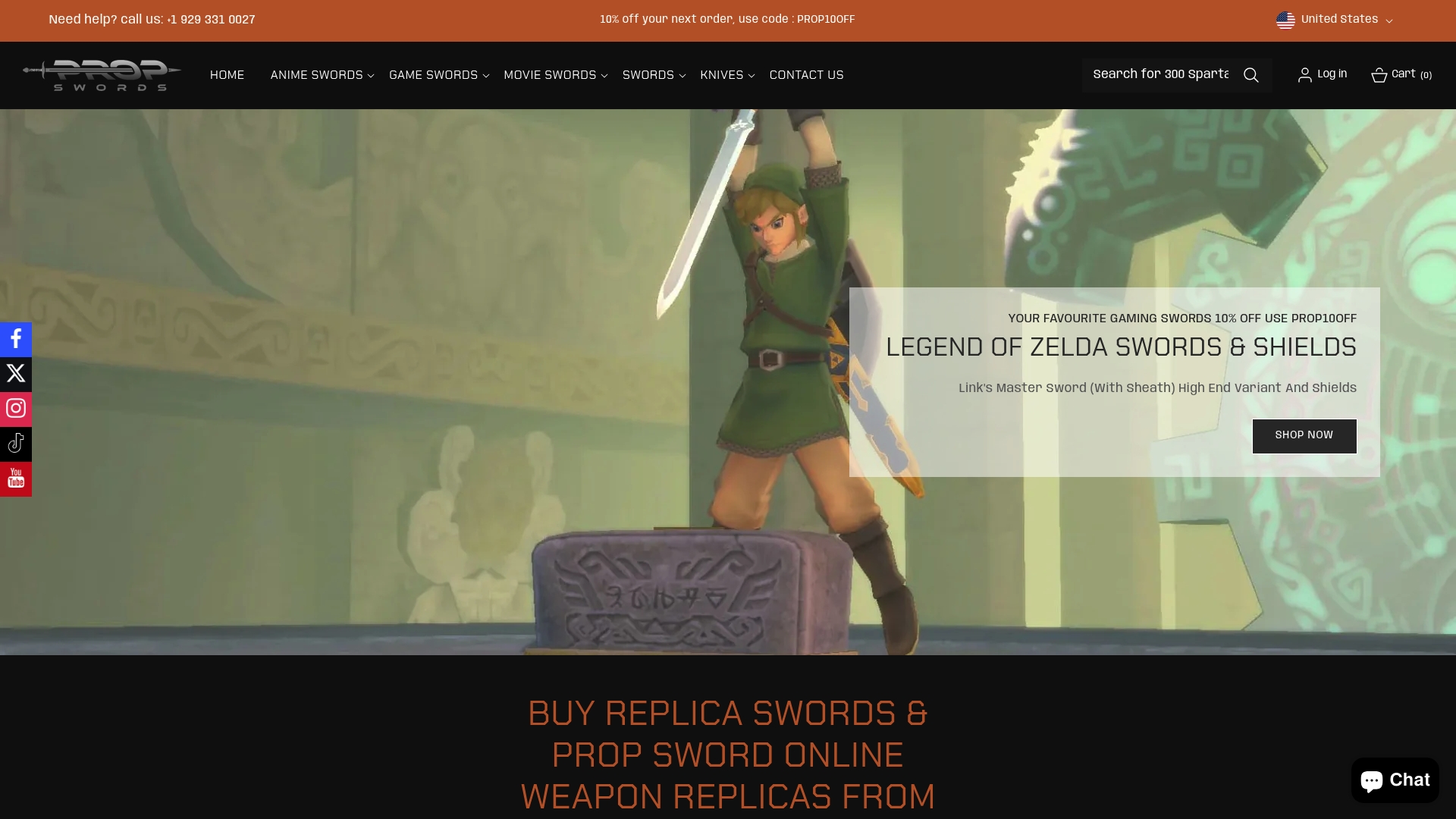
Explore our extensive collection that caters to collectors who demand museum-level quality and cosplayers who require lightweight, dependable props. Act now to enjoy free shipping within the USA and unlock discounts that make owning your perfect replica sword easier than ever. Visit Propswords to find your ideal sword and join a community that values authenticity and passion. Start your journey today and transform fandom into reality with our remarkable movie sword replicas. For any questions or support, our team is ready to assist you in making the best choice.
Frequently Asked Questions
What are movie sword replicas?
Movie sword replicas are detailed reproductions of famous swords featured in films, television series, and streaming shows. They are crafted with attention to detail and serve as collectibles, costume accessories, or functional art pieces.
What is the difference between display replicas and functional replicas?
Display replicas prioritize visual accuracy and are designed to look great on display, often made from materials optimized for appearance. Functional replicas are built for durability and performance, allowing for handling, sparring, or reenactments while mimicking the look of real swords.
What materials are commonly used in movie sword replicas?
Common materials include high-carbon steel for functional swords, stainless steel for display pieces, aluminum for lightweight props, and resin for decorative elements. The choice of material affects durability, weight, and authenticity.
Are there legal restrictions for owning movie sword replicas?
Yes, legal restrictions vary greatly by region and can include ownership limitations, transportation rules, and display regulations. It is essential to research and understand the laws concerning replicas in your area to ensure compliance.