Recent Post

Evolution of Medieval Swords: Craft, Combat, and Legacy

Types of Historical Swords: Why Forms Matter

Why Buy Movie Swords: Fandom, Art, and Value

How to Choose Replica Swords for Cosplay and Display

7 Authentic Examples of Viking Swords Explained

Sword Craftsmanship: Why Quality Shapes Collecting
Leave a comment
Evolution of Medieval Swords: Craft, Combat, and Legacy
Spotting the difference between a real medieval sword and a Hollywood fantasy prop can feel overwhelming for even the most dedicated collector. Accurate knowledge matters because owning a true-to-history replica means more than just filling a display case—it connects you to the innovations, myths, and artistry of European knights and warriors. This guide cuts through common myths and highlights the technological sophistication and cultural depth that define a genuine medieval sword.
Table of Contents
- What Defines A Medieval Sword And Common Myths
- Key Types And Forms Across The Ages
- Technological Advances And Battlefield Roles
- Symbolism, Status, And Societal Meaning
- Modern Replicas In Collecting And Cosplay
- Care, Legalities, And Responsible Ownership
Key Takeaways
| Point | Details |
|---|---|
| Historical Authenticity | Medieval swords are complex artifacts, distinguished by features like blade length, double-edge design, and use of high-carbon steel. |
| Common Misconceptions | Myths suggest swords were massive and unwieldy; in reality, most combat swords weighed between 2-4 pounds for better maneuverability. |
| Technological Advances | Sword design evolved significantly due to advancements in metallurgy and changing battlefield needs, leading to lighter and stronger blades. |
| Cultural Significance | Swords served as symbols of status and identity, embodying personal honor and societal narratives beyond their utility as weapons. |
What Defines a Medieval Sword and Common Myths
Medieval swords represent far more than mere weapons - they are complex technological artifacts embodying sophisticated metallurgical and design innovations of their era. Understanding what truly constitutes a medieval sword requires moving beyond romanticized Hollywood depictions and delving into historical authenticity.
Historically, a true medieval sword possessed several critical characteristics that distinguished it from other bladed weapons:
- Blade length typically between 28-36 inches
- Double-edged design allowing cutting and thrusting techniques
- Constructed from high-carbon steel for superior strength
- Featuring a distinct crossguard to protect the wielder’s hand
- Pommel designed for counterbalancing blade weight
Contrary to popular myths propagated by fantasy media, medieval swords were not universally massive or impractically heavy. Cultural representations of sword symbolism often diverge significantly from historical realities. Most combat swords weighed between 2-4 pounds, enabling quick maneuverability and precise striking.
Many misconceptions surrounding medieval swords stem from misunderstandings about their practical applications. Medieval sword typology challenges popular perceptions by revealing these weapons were sophisticated tools of warfare, nobility, and social status - not just crude instruments of violence.
Common myths about medieval swords include:
- All swords were massive and unwieldy
- Swords were primary battlefield weapons
- Every knight carried an identical sword
- Sword crafting was a simplistic process
Metallurgical expertise was crucial in sword production. Blacksmiths carefully selected iron sources, implemented complex heating and folding techniques, and understood metallurgical principles long before modern scientific understanding.
Pro tip: When evaluating medieval sword authenticity, focus on craftsmanship details like blade geometry, material composition, and historical context rather than romanticized representations.
Key Types and Forms Across the Ages
[Medieval sword typology reveals a fascinating evolution of blade design, reflecting technological advancements and changing combat strategies across different historical periods. These swords were not uniform artifacts, but dynamic tools that transformed with societal needs and metallurgical innovations.
Medieval sword classifications demonstrate remarkable diversity, with distinctive forms emerging from specific cultural and military contexts. The primary sword types include:
- Viking swords: Short, broad blades with distinctive pattern-welded construction
- Carolingian swords: Longer, more slender designs emphasizing thrusting capabilities
- Norman swords: Balanced blades supporting both cutting and thrusting techniques
- Crusader swords: Broader, heavier blades designed for armored combat
- Longswords: Two-handed weapons featuring extended grips for increased leverage
Each sword type represented a sophisticated response to specific battlefield requirements. Viking swords, for instance, were crafted to withstand brutal close-quarter combat, while later medieval designs prioritized piercing armor and maintaining maneuverability.
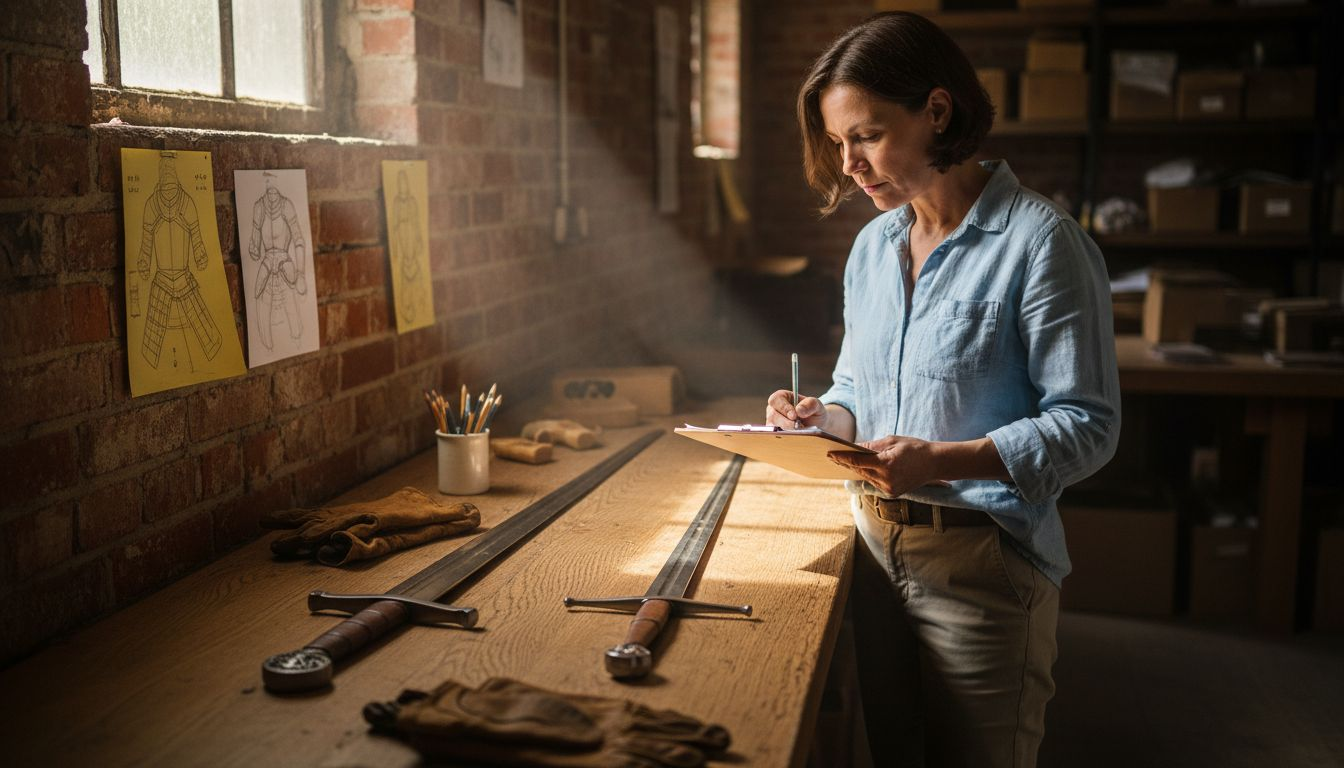
The progression of sword forms reflects not just martial technology, but broader social transformations. Early medieval swords were primarily functional weapons, whereas later designs incorporated increasingly elaborate decorative elements signaling social status and personal identity.
Regional variations further complicated sword development. Northern European blacksmiths developed different forging techniques compared to their Southern counterparts, resulting in unique metallurgical characteristics that distinguished regional sword production.
Here’s a comparison of major medieval sword types and their unique battlefield roles:
| Sword Type | Design Focus | Typical Use Case | Notable Feature |
|---|---|---|---|
| Viking | Cutting and power | Close-quarters combat | Pattern-welded construction |
| Carolingian | Thrusting strength | Cavalry and infantry skirmish | Long, slender blade |
| Norman | Versatility | Mixed offense and defense | Balanced grip and blade |
| Crusader | Armor penetration | Armored warfare | Broad, weighty blade |
| Longsword | Leverage and reach | Two-handed combat | Extended handle |
Technological innovation drove sword design, with blacksmiths continuously refining metallurgical processes to create stronger, more resilient blades. Carbon content, forging temperatures, and folding techniques became increasingly sophisticated over centuries.
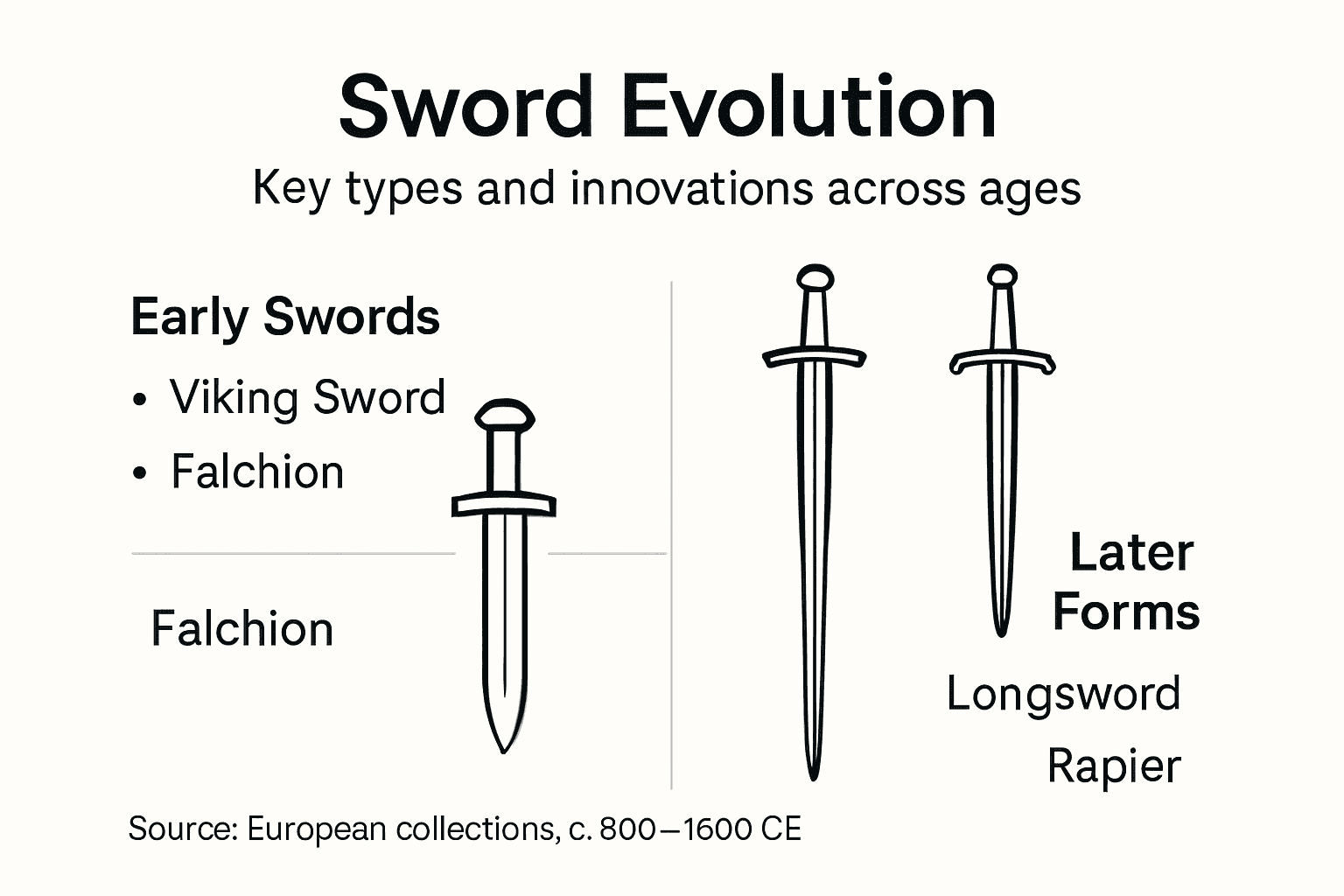
Pro tip: When studying medieval sword evolution, examine both the technological innovations and the social contexts that drove design changes.
Technological Advances and Battlefield Roles
The evolution of medieval swords was fundamentally driven by an intricate arms race between weapon design and defensive armor technologies. Medieval weapon technological developments reveal a sophisticated progression of metallurgy, blade geometry, and tactical requirements.
Key technological advances in sword design emerged from critical battlefield requirements:
- Improved steel composition for enhanced blade durability
- Refined blade geometry to maximize penetration capabilities
- Advanced heat treatment techniques for superior metal performance
- Lightweight designs enabling faster combat movements
- Specialized blade profiles targeting specific armor weaknesses
The transition from broad cutting blades to narrow, pointed thrusting swords represented a pivotal technological shift. Early medieval swords were designed for sweeping strikes against unarmored opponents, while later designs featured acute tips specifically engineered to penetrate chainmail and plate armor.
Blacksmiths became critical engineering specialists, understanding metallurgical principles that allowed them to create increasingly sophisticated weapons. Carbon content, forging temperatures, and folding techniques became progressively more nuanced, enabling swords that were simultaneously lighter, stronger, and more versatile.
Metallurgical innovation transformed sword design from simple iron implements to complex, precision-engineered instruments of warfare. Northern European smiths developed unique techniques that allowed for more flexible yet resilient blade constructions, giving their warriors significant technological advantages.
Battlefield roles for swords evolved dramatically. What began as primary combat weapons gradually became symbols of social status, with elaborate decorative elements reflecting a warrior’s rank and cultural significance.
Pro tip: Examine sword designs as technological artifacts that reflect not just martial capabilities, but broader societal engineering achievements.
Symbolism, Status, and Societal Meaning
The medieval sword transcended its physical role as a weapon, emerging as a profound cultural symbol that encoded complex social narratives and personal identities. Sword symbolism in medieval culture reveals a multifaceted artifact representing far more than mere martial capability.
Swords functioned as powerful social markers that communicated intricate layers of meaning:
- Markers of noble lineage
- Representations of personal honor
- Ceremonial objects with religious significance
- Indicators of professional military status
- Legal symbols in judicial proceedings
Chivalric sword symbolism illuminated deeper cultural complexities. Knights did not simply carry swords; they embodied complex warrior identities through these meticulously crafted instruments. A sword’s design, decoration, and provenance could instantly communicate a warrior’s social standing, familial connections, and martial achievements.
Religious and judicial contexts further elevated the sword’s symbolic significance. In medieval legal systems, swords represented divine judgment and societal authority. Ceremonial sword presentations during knighting rituals transformed these objects from weapons into sacred symbols of virtue, responsibility, and social covenant.
Regional variations added complexity to sword symbolism. Northern European traditions often emphasized intricate metalwork and familial emblems, while Southern European designs incorporated more ornate religious iconography, reflecting distinct cultural interpretations of martial prowess and spiritual dedication.
Beyond physical utility, swords became living historical documents. Each sword told a narrative of its creator, owner, and the broader societal context in which it was forged. Metallurgical techniques, decorative elements, and subtle design nuances spoke volumes about technological capabilities and social hierarchies.
Pro tip: When examining historical swords, look beyond physical characteristics to understand the rich cultural narratives embedded in their design and craftsmanship.
Modern Replicas in Collecting and Cosplay
Historical swordsmanship recreation has transformed modern sword collecting from a niche hobby to a sophisticated cultural pursuit. Contemporary enthusiasts now seek replicas that represent not just historical accuracy, but living historical narratives.
Modern sword replica categories include:
- Historical reenactment pieces
- Cosplay performance props
- Display collection artifacts
- Martial arts training weapons
- Academic research reproductions
Collectors and cosplayers prioritize several key attributes when selecting medieval sword replicas. Types of replica swords range from museum-grade historical reproductions to fantastical interpretations inspired by popular media.
Authenticity remains a critical consideration for serious collectors. Detailed metallurgical techniques, accurate historical design elements, and precise manufacturing processes separate high-quality replicas from mass-produced decorative pieces. Modern craftspeople often employ advanced techniques like computer-aided design and precision metalworking to create increasingly sophisticated reproductions.
Cosplay and entertainment industries have further expanded the replica sword market. Performance props now range from lightweight foam representations to meticulously crafted metal replicas that can withstand rigorous stage combat choreography. These artifacts bridge historical education, artistic expression, and entertainment.
Regional and cultural variations continue to influence replica design, with European, Asian, and Middle Eastern sword traditions each offering unique aesthetic and functional characteristics that fascinate collectors worldwide.
To better understand sword collecting today, review the distinguishing purposes of modern replicas:
| Replica Purpose | Key Attribute | Typical Materials |
|---|---|---|
| Historical reenactment | Authentic appearance | Tempered high-carbon steel |
| Cosplay performance | Safe for stage use | Foam, aluminum, plastics |
| Martial arts training | Balanced for technique | Blunt steel or synthetic |
| Academic research | Precision to historical data | Replicated historic alloys |
Pro tip: Always verify a sword replica’s authenticity through multiple sources and examine its craftsmanship details before making a purchase.
Care, Legalities, and Responsible Ownership
Medieval sword ownership regulations extend far beyond simple legal restrictions, representing complex social negotiations about power, status, and personal responsibility. Modern collectors must navigate a nuanced landscape of ethical and legal considerations.
Key responsibilities for sword collectors include:
- Proper storage and environmental control
- Regular maintenance and preservation
- Understanding local legal restrictions
- Securing appropriate insurance
- Implementing safety protocols
Sword carrying laws highlight the intricate balance between personal freedom and societal safety. Contemporary collectors must be aware of multiple legal dimensions:
- Federal weapon transportation regulations
- State-specific blade length restrictions
- Collector exhibition permissions
- International import/export guidelines
- Display and storage legal requirements
Preservation requires meticulous attention. Humidity control, temperature stability, and minimal handling are critical for maintaining historical replicas. Professional-grade silica gel packets, climate-controlled display cases, and archival-quality protective coatings can significantly extend a sword’s lifespan.
Ethical collecting transcends legal compliance. Responsible enthusiasts understand their role as temporary custodians of historical artifacts, prioritizing preservation, research, and respectful representation of cultural heritage.
Pro tip: Consult local legal experts and collector associations to develop a comprehensive understanding of sword ownership regulations in your specific jurisdiction.
Discover the Legacy of Medieval Swords with Authentic Replicas
Understanding the evolution of medieval swords reveals the craftsmanship, technological innovation, and symbolic meaning behind these iconic weapons. If you are fascinated by how metallurgy and design shaped combat and culture throughout history, you deserve more than just facts – you deserve to own a piece of that legacy. Whether you are a collector, cosplayer, or martial arts enthusiast, accessing high-quality replicas that honor historical accuracy and rich craftsmanship is key to connecting with that timeless heritage.
Explore the diverse range of swords at Propswords where we specialize in detailed, durable replicas inspired by real medieval designs and popular fantasy worlds. Act now and elevate your collection or cosplay with swords that blend authenticity and artistic passion. Take advantage of our free shipping within the USA and ongoing discounts for a seamless, rewarding experience. Start your journey into the craft and legacy of medieval swords today by visiting Propswords and discovering swords that truly embody history, status, and power.
Frequently Asked Questions
What are the main characteristics of a medieval sword?
Medieval swords typically feature a blade length between 28-36 inches, a double-edged design for cutting and thrusting, high-carbon steel construction, a distinct crossguard for hand protection, and a pommel for counterbalancing the blade’s weight.
How did the design of medieval swords evolve over time?
The design of medieval swords evolved to meet changing battlefield needs, including improvements in steel composition, blade geometry, and the introduction of specialized profiles for penetrating armor. Different sword types emerged to reflect specific combat strategies and cultural contexts.
What common myths about medieval swords are perpetuated by popular culture?
Common myths include the belief that all swords were large and heavy, that swords were the primary weapons used on battlefields, and that every knight carried the same sword. In reality, most medieval swords were designed to be lightweight and versatile.
Why is proper maintenance important for sword collectors?
Proper maintenance is crucial for preserving the condition of swords, including maintaining humidity levels, controlling temperature, and minimizing handling. This helps ensure that historical replicas and authentic swords remain in good condition and retain their value over time.