Recent Post

7 Authentic Examples of Viking Swords Explained

Sword Craftsmanship: Why Quality Shapes Collecting

Demon Slayer Sword Colors Meaning Discover the Hidden Power Behind Every Blade

Tanjiro’s Black Sword Meaning The Secret Destiny of Demon Slayer’s Rarest Blade

Zenitsu Sword Color Revealed The Shocking Truth Behind the Thunder Blade

Shinobu’s Sword Color Revealed The Deadly Beauty of the Purple Nichirin Blade
Leave a comment
Sword Craftsmanship: Why Quality Shapes Collecting
Standing before your favorite anime or movie sword display, you may wonder what truly separates a mass-produced prop from a breathtaking collector’s piece. For fans devoted to accurate cosplays and lifelike displays, understanding modern sword craftsmanship goes well beyond flashy aesthetics. By uncovering how traditional forging, cultural influences, and advanced metallurgy unite in today’s blades, you can select or showcase swords that tell authentic stories and reflect true artistic mastery.
Table of Contents
- What Defines Sword Craftsmanship Today
- Sword Types: Historical And Pop Culture Influences
- Key Stages Of Sword Making Explained
- Characteristics That Distinguish Quality Replicas
- Common Misconceptions And Collector Mistakes
Key Takeaways
| Point | Details |
|---|---|
| Sword craftsmanship combines tradition and technology | Modern techniques, such as precision engineering and metallurgical advancements, enhance traditional sword making. |
| Cultural significance enriches sword design | Contemporary swords embody stories and inspirations from various historical and cultural influences. |
| Quality over aesthetics in collecting | Serious collectors should prioritize understanding craftsmanship and historical context over mere visual appeal. |
| Know the fundamentals to avoid common pitfalls | Successful sword collectors must do thorough research, verify provenance, and practice proper maintenance techniques. |
What Defines Sword Craftsmanship Today
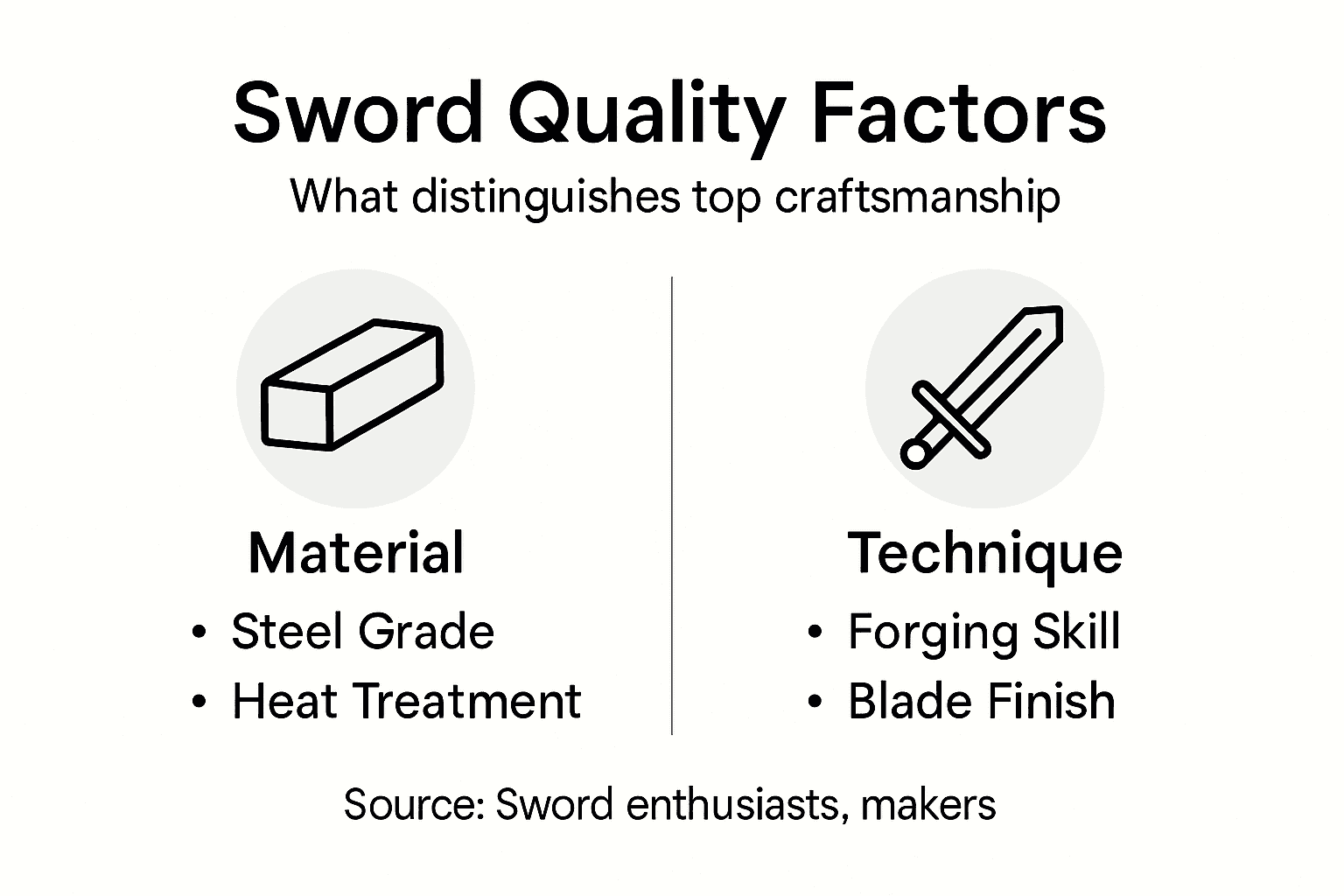
Sword craftsmanship represents a complex fusion of historical techniques and modern technological advancements, transforming an ancient art form into a sophisticated contemporary practice. Modern metallurgical techniques have revolutionized how artisans approach blade creation, blending traditional methods with cutting-edge precision engineering.
Today’s sword crafting involves several critical components that distinguish exceptional work from ordinary production. Key elements include:
- Material Selection: Choosing high-grade steels with specific carbon content and molecular structures
- Forging Techniques: Using precise temperature control and hammer techniques
- Heat Treatment: Applying complex quenching and tempering processes
- Aesthetic Finishing: Creating detailed surface treatments and decorative elements
Contemporary sword makers draw inspiration from multiple cultural traditions, incorporating design principles from Japanese katanas, European longswords, and Middle Eastern scimitars. This global approach allows craftsmen to create pieces that are not merely weapons but intricate works of art, blending functional design with cultural storytelling.
The most respected sword craftsmen today understand that true quality transcends mere functional utility. They view each sword as a narrative object, embodying centuries of metalworking knowledge while simultaneously pushing technological boundaries. Precision metallurgy, computer-aided design, and advanced thermal processing have transformed sword making from a purely manual craft to a sophisticated interdisciplinary art form.
Pro tip: Always examine a sword’s metallurgical composition and heat treatment process to truly assess its craftsmanship quality.
Sword Types: Historical And Pop Culture Influences
Sword types represent far more than simple weapons—they are intricate cultural artifacts that tell complex stories of human innovation and artistic expression. Sword types have evolved dramatically across different geographic regions, reflecting technological advancements and societal needs.
Historical sword varieties showcase remarkable diversity, each designed with specific combat and cultural considerations:
Here’s how major historical sword types compare in design and purpose:
| Sword Type | Blade Shape | Main Use | Cultural Origin |
|---|---|---|---|
| Gladius | Short, straight | Close combat | Ancient Rome |
| Katana | Curved, single-edged | Precision cuts | Japan |
| Longsword | Long, double-edged | Versatile fighting | Medieval Europe |
| Scimitar | Curved, broad | Cavalry warfare | Middle East |
- Roman Gladius: Short, powerful sword for close-quarter legionary combat
- Japanese Katana: Curved, single-edged blade emphasizing precision and elegant design
- Medieval European Longsword: Two-handed weapon optimized for versatile fighting techniques
- Middle Eastern Scimitar: Curved blade ideal for mounted cavalry warfare
Popular culture has dramatically transformed how we perceive these historic weapons. Anime, movies, and video games have reimagined sword designs, often blending authentic historical elements with fantastical aesthetics. Role of swords in storytelling has expanded their significance beyond mere combat tools, turning them into symbolic representations of character identity, cultural heritage, and personal mythology.
Collectors and enthusiasts appreciate sword types not just as historical artifacts but as complex narratives of human craftsmanship. Modern interpretations frequently draw inspiration from traditional designs while incorporating contemporary metallurgical techniques, creating pieces that bridge historical authenticity with current technological capabilities.
Pro tip: When collecting swords, focus on understanding the cultural context and craftsmanship behind each unique design.
Key Stages Of Sword Making Explained
Sword making is a complex craft that transforms raw metal into an extraordinary piece of functional art. Sword making involves precise metallurgical stages that require incredible skill, patience, and technological understanding.
The fundamental stages of sword creation include:
- Steel Selection: Choosing high-quality metals with specific carbon content and molecular characteristics
- Forging: Heating steel to extreme temperatures and skillfully hammering to shape the blade
- Quenching: Rapidly cooling the blade to increase hardness and structural integrity
- Tempering: Reducing blade brittleness while maintaining critical strength parameters
- Grinding: Refining the blade’s shape, sharpness, and overall geometric precision
- Hilt Assembly: Integrating handle, guard, and pommel to create a balanced weapon
Modern sword crafting techniques blend traditional metalworking methods with contemporary technological innovations. Each stage demands extraordinary precision, with master craftsmen spending years perfecting their understanding of metallurgical transformations and blade dynamics.
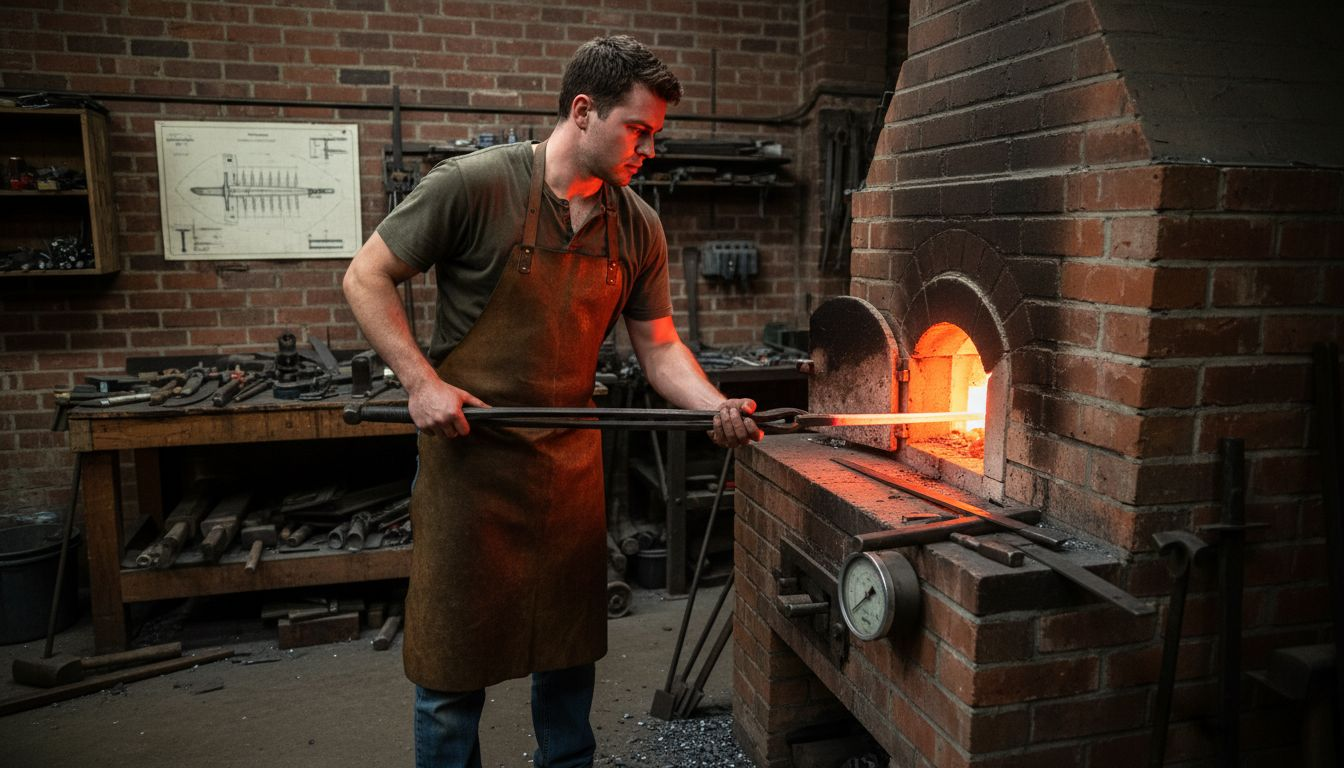
The nuanced process transforms raw materials into extraordinary objects that transcend mere functionality. Advanced swordsmiths understand that each blade represents a complex interaction between material science, historical technique, and artistic expression—creating not just a weapon, but a narrative embodied in metal.
Pro tip: Always examine a sword’s metallurgical composition and heat treatment process to truly assess its craftsmanship quality.
Characteristics That Distinguish Quality Replicas
Sword replicas represent far more than decorative objects—they are intricate historical narratives crafted through precision and expertise. Historical sword reproduction requires meticulous attention to design, materials, and structural integrity.
Key characteristics that distinguish exceptional sword replicas include:
- Material Authenticity: Using period-appropriate steel compositions
- Structural Balance: Maintaining precise weight distribution similar to original designs
- Dimensional Accuracy: Recreating exact measurements and proportions
- Visual Fidelity: Capturing intricate historical design elements
- Functional Integrity: Ensuring the replica could theoretically perform like its historical counterpart
- Manufacturing Precision: Employing techniques that mirror traditional crafting methods
The difference between an average replica and an extraordinary one lies in the craftsman’s commitment to historical accuracy. Modern replica makers must blend deep historical research with advanced metallurgical techniques, transforming raw materials into objects that transcend mere imitation.
Collectors and enthusiasts understand that a true quality replica is more than a visual representation—it’s a three-dimensional historical document that tells a complex story through its design, materials, and craftsmanship. Each carefully constructed sword becomes a bridge connecting contemporary audiences with ancient martial traditions.
Pro tip: Always examine a replica’s metallurgical composition, weight distribution, and manufacturing techniques to assess its true quality.
Common Misconceptions And Collector Mistakes
Sword collecting requires far more than casual enthusiasm—it demands rigorous knowledge and strategic understanding. Sword collector mistakes often stem from fundamental misunderstandings about historical artifacts and their complex preservation requirements.
Common misconceptions among sword enthusiasts include:
- Authenticity Confusion: Mistaking decorative replicas for functional historical swords
- Value Misunderstanding: Overestimating or undervaluing a sword’s true worth
- Preservation Ignorance: Neglecting proper storage and maintenance techniques
- Research Deficiency: Purchasing items without thorough background investigation
- Emotional Purchasing: Buying based on aesthetic appeal rather than historical significance
- Provenance Oversight: Failing to verify an item’s historical documentation
Proper sword collection strategies require meticulous attention to detail and continuous learning. Serious collectors understand that each sword represents a complex historical narrative, not merely a decorative object. The journey involves developing deep metallurgical knowledge, understanding cultural contexts, and mastering preservation techniques.
Successful collectors approach their passion as a scholarly pursuit, combining emotional appreciation with academic rigor. They recognize that true value lies not in superficial appearance but in understanding the intricate stories embedded within each blade’s design, material composition, and historical trajectory.
The following table highlights common collector mistakes and better practices:
| Mistake Type | Impact | Best Practice |
|---|---|---|
| Focusing on looks only | Acquiring inauthentic pieces | Prioritize historical research |
| Ignoring provenance | Reduced value | Request documented history |
| Poor maintenance | Accelerated deterioration | Learn correct preservation techniques |
| Impulse buying | Overpaying or disappointment | Consult with experts |
Pro tip: Always document your sword’s provenance, conduct thorough research, and consult expert appraisers before making significant acquisitions.
Discover Exceptional Sword Replicas That Reflect True Craftsmanship
Understanding the intricate process of sword craftsmanship and the importance of metallurgical quality can make all the difference when selecting your collection pieces. At Propswords, we recognize that serious collectors and enthusiasts seek more than just visual appeal— they want historically inspired, high-quality swords that honor precision forging, heat treatment, and authentic design. Whether you are fascinated by anime-inspired blades or historical replicas, each piece is thoughtfully crafted to embody the rich stories behind these iconic swords.
Elevate your collection today by exploring our diverse selection at Propswords. Don’t miss your chance to own detailed, balanced replicas that bring the narrative and craftsmanship of legendary swords to life. Visit now and enjoy offers like free shipping within the USA and exclusive discounts designed for collectors who demand quality and authenticity.
Frequently Asked Questions
What is the importance of material selection in sword craftsmanship?
Material selection is crucial as it determines the sword’s strength, flexibility, and overall performance. High-grade steels with specific carbon content and molecular structures contribute to a blade’s durability and effectiveness.
How do modern forging techniques impact the quality of swords?
Modern forging techniques involve precise temperature control and advanced hammering methods that enhance the blade’s structural integrity and performance. These techniques ensure a better finish and improved durability compared to traditional methods alone.
What are the stages involved in the sword making process?
The key stages of sword making include steel selection, forging, quenching, tempering, grinding, and hilt assembly. Each stage is instrumental in transforming raw metal into a functional and aesthetic piece of art.
How can collectors determine the quality of sword replicas?
Collectors can assess the quality of sword replicas by evaluating material authenticity, structural balance, dimensional accuracy, visual fidelity, and functional integrity. Understanding these characteristics helps ensure that a replica is a true representation of the historical original.