
Recent Post

Differences in Display Swords: Collector’s Key Insights

Role of Swords in Historical Reenactment Events

Role of Swords in Cosplay: Enhancing Realism and Impact

6 Iconic Examples of Movie Swords for Collectors

6 Essential Types of Cosplay Swords for Accurate Costumes

Why Display Swords: Enhancing Collections and Space
Leave a comment
Differences in Display Swords: Collector’s Key Insights
Finding the perfect sword for display feels like searching for art that reflects your identity and passions. This matters especially for American collectors and cosplayers seeking anime and fantasy-themed replicas that stand out both visually and in craftsmanship. By understanding that display swords serve as bold statements—prioritizing ornamental qualities and artistic expression—you can choose pieces that enhance your collection and elevate your cosplay experience.
Table of Contents
- What Makes A Sword A Display Sword
- Main Types: Decorative, Cosplay, Historical Replicas
- Materials, Craftsmanship, And Tang Construction
- Collector Risks: Safety, Legality, Value Loss
- Mistakes To Avoid When Selecting Display Swords
Key Takeaways
| Point | Details |
|---|---|
| Display Swords vs. Functional Swords | Display swords prioritize aesthetics and craftsmanship over practicality, serving as art rather than combat tools. |
| Types of Display Swords | The main categories include decorative, cosplay, and historical replicas, each tailored to different collector goals. |
| Material and Craftsmanship Importance | Quality display swords are defined by premium materials and skilled craftsmanship that enhance both durability and visual appeal. |
| Collector Responsibilities | Collectors must understand legal regulations, safety precautions, and maintenance to protect their investment and ensure long-term value. |
What Makes a Sword a Display Sword
Display swords are fundamentally different from functional combat weapons. They prioritize aesthetics, craftsmanship, and visual impact over battle-readiness. Think of them as sculptures that happen to have a sword shape.
The core distinction lies in what’s emphasized. Functional combat swords focus on edge durability, weight distribution, and survival in actual combat. Display swords, however, highlight ornamental details, intricate designs, and artistic expression. Craftsmanship prioritizes ornamental qualities in display pieces, marking a clear departure from purely functional arms.
Historically, display swords served as status symbols. Elite collectors and warriors commissioned these pieces to showcase wealth, taste, and identity rather than to rely on them in combat. Swords as material agents express personal identity and cultural significance beyond mere functionality.
Key characteristics of display swords include:
- Decorative elements on the blade, guard, and hilt—etchings, inlays, or artistic patterns
- Premium materials like high-quality steel, leather grips, and polished finishes
- Balanced aesthetics over combat practicality—visible craftsmanship details throughout
- Limited edge sharpness or purposefully dulled blades for safety in display environments
- Detailed hilts featuring wrapped handles, ornate guards, and impressive pommel designs
- Visual storytelling through iconic designs from anime, fantasy, or historical inspiration
For cosplayers and collectors specifically, display swords offer something combat-ready weapons cannot. You get the full visual presence and accuracy of your favorite anime or fantasy character without compromising safety. This matters when you’re building a collectible display or wearing armor to conventions where sharp weapons create liability issues.
Display swords transform weapons into art, designed for admiration rather than action.
Material choices matter too. Quality display swords use stainless steel or high-carbon steel finished with protective coatings. The blade might feature an attractive patina or mirror polish, while the handle showcases real leather wrapping and authentic weight distribution for holding and posing.
When examining whether a sword qualifies as a display piece, look for signs the maker prioritized visual impact. Intricate etching work that would be pointless in combat, elaborate guard designs, and premium finishing all signal a piece made for collectors like you.
Pro tip: Examine the blade edge and point closely before purchasing—display swords should feel smooth and safe to handle, with no actual sharpness despite looking authentic.
Main Types: Decorative, Cosplay, Historical Replicas
Display swords fall into three distinct categories, each serving different collector goals and aesthetic priorities. Understanding these types helps you choose the right piece for your collection or costume.
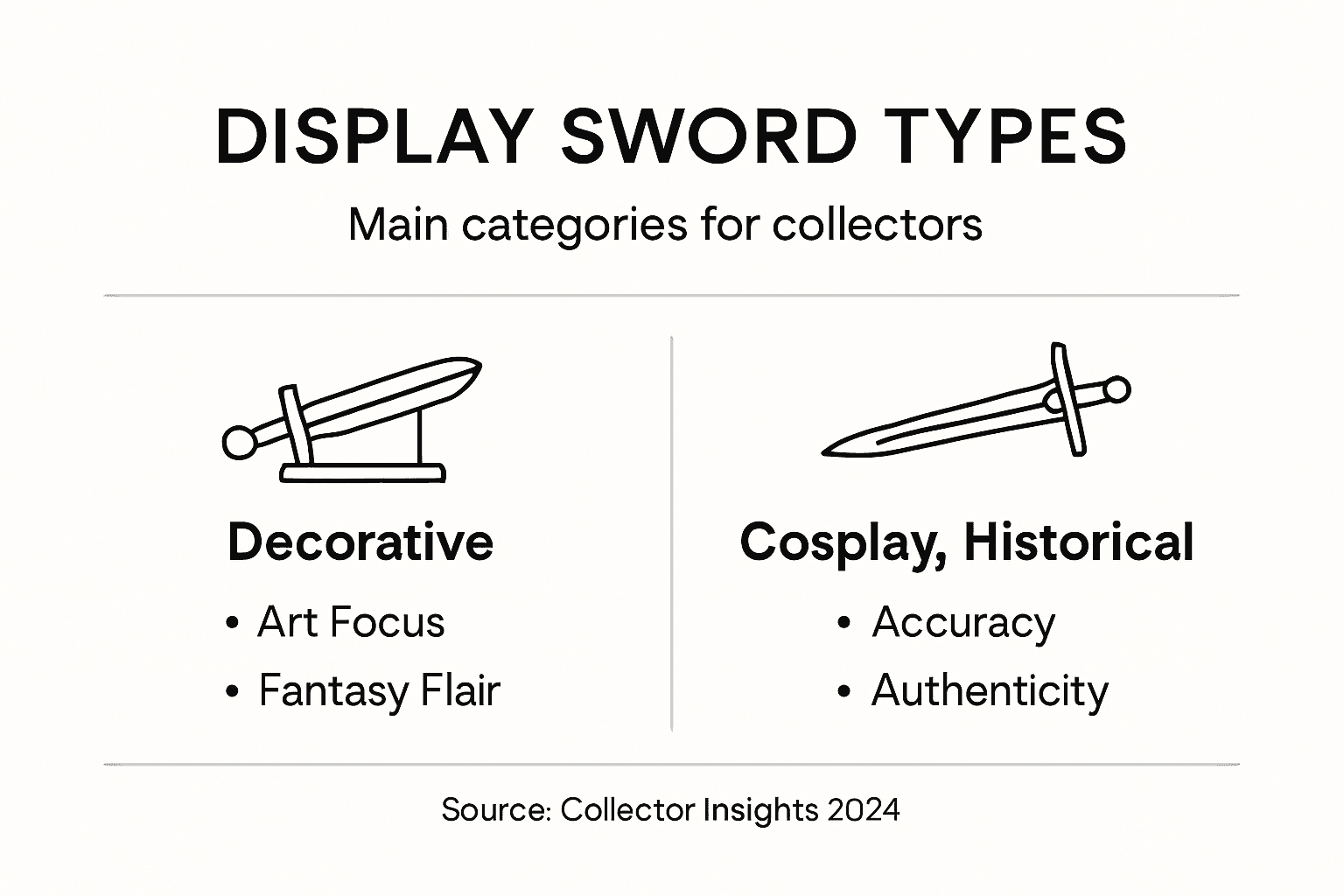
Decorative swords prioritize pure visual artistry. These pieces emphasize stunning aesthetics with minimal concern for historical accuracy or functional capability. Think intricate blade etchings, ornate guards, and premium finishes that make them shine in display cases.
Decorative swords work best when you want impact without worrying about authenticity. They’re perfect for fantasy-inspired designs, artistic interpretations, and pieces that blend multiple cultural influences into something entirely unique. No one expects them to be historically accurate.
Cosplay swords balance visual accuracy with practical safety. These replicas prioritize looking exactly like your character’s weapon while remaining lightweight and safe for wearing at conventions or events. Swords emphasize visual accuracy alongside lightweight safety features designed for costume wear.
For cosplayers, this category is essential. Your sword needs to photograph well, match your character perfectly, and not exhaust you while wearing a full costume for six hours. The blade won’t be sharp, but the design will be unmistakably accurate to your favorite anime or fantasy character.
Historical replicas aim for authenticity in form and function. These pieces recreate famous or traditional swords with attention to materials, proportions, and historical accuracy. Collectors pursuing these swords want pieces that honor the original weapons’ heritage.
Historical replicas range from display-only pieces to functional training weapons. Display swords categorized into types reflect cultural and functional distinctions worldwide, encompassing ceremonial, battle, and decorative variations.
Here’s how these three compare:
- Decorative: Artistic focus, any design imaginable, no historical constraints
- Cosplay: Character-accurate, lightweight, safety-optimized, costume-ready
- Historical Replicas: Authentic proportions, cultural accuracy, traditional materials
Your choice depends on what matters most to you. Are you building a visually stunning display wall? Cosplay demands character accuracy. Collecting pieces tied to actual history? Historical replicas deliver that authenticity.
Each type serves collectors differently—pick the category matching your collection’s purpose.
Many collectors own all three types. A decorative anime-inspired sword brings fantasy flair to shelving, a cosplay replica gets worn to conventions, and a historical Viking sword adds cultural depth to your collection.
Pro tip: Before purchasing, identify which category best serves your goal—decorative for display impact, cosplay for costume accuracy, historical replicas for authentic cultural pieces.
Here’s a quick comparison of the primary display sword categories and their best-use scenarios:
| Sword Type | Target User | Display Value | Maintenance Needs |
|---|---|---|---|
| Decorative | Art collectors | Pure visual impact | Minimal—requires dusting |
| Cosplay | Cosplayers | Character authenticity | Low—wipe, check for wear |
| Historical Replica | History enthusiasts | Cultural significance | Moderate—prevent corrosion |
Materials, Craftsmanship, and Tang Construction
What separates a quality display sword from a mediocre replica comes down to three factors: materials, craftsmanship, and how the blade connects to the handle. These elements determine durability, visual appeal, and collector value.
Materials form the foundation of any display sword. High-carbon steel and stainless steel are the primary choices, each with distinct advantages. High-carbon steel holds sharper edges and develops authentic patinas over time, while stainless steel resists corrosion and requires minimal maintenance.
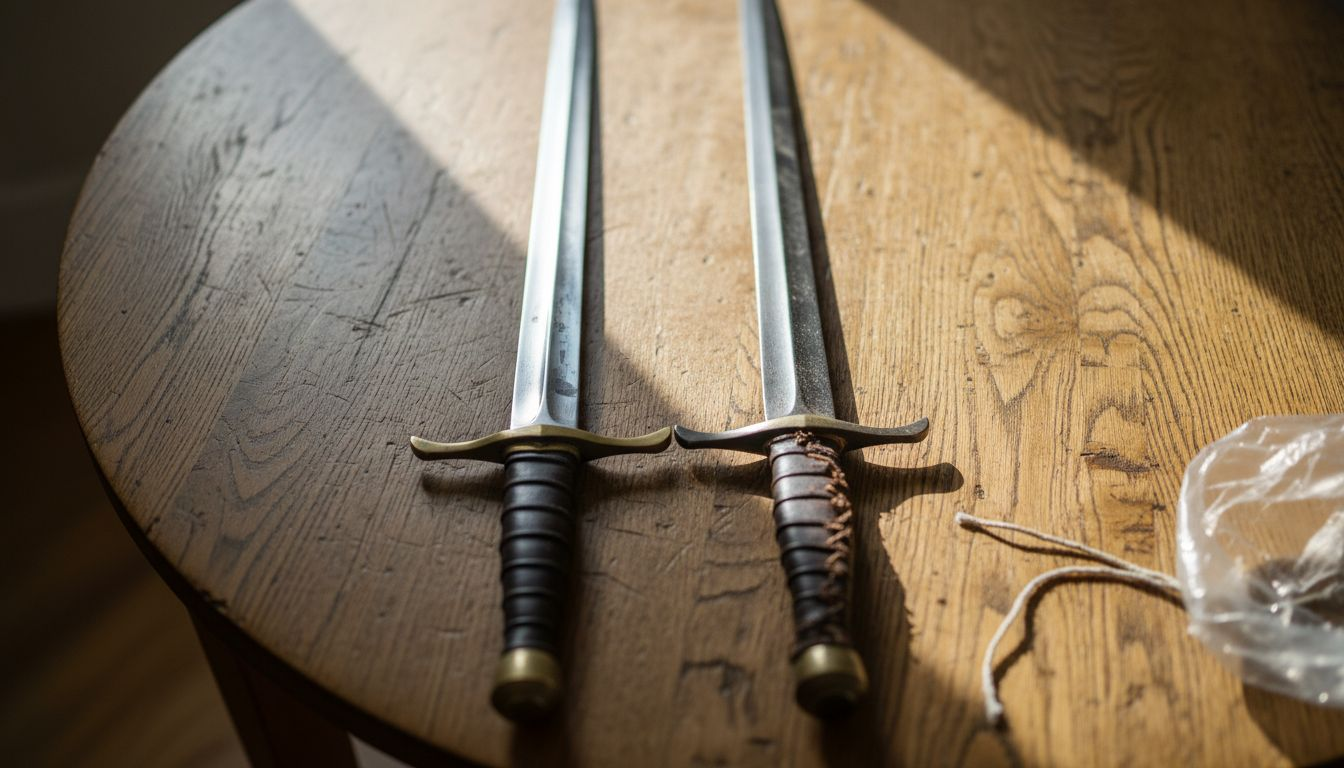
For display pieces, stainless steel dominates because it stays beautiful without constant care. You won’t watch your prized anime sword rust in your climate-controlled room. High-carbon steel appeals to collectors prioritizing historical authenticity and willing to maintain their pieces regularly.
The hilt materials matter equally. Premium display swords feature genuine leather wrapping, brass or steel guards, and weighted pommels that feel substantial in hand. Budget replicas substitute cheap synthetic materials that look plasticky and cheapen the entire piece.
Craftsmanship determines how well these materials come together. This involves precision blade forging, careful handle assembly, and attention to detail in every component. A well-crafted sword has smooth transitions between blade and guard, secure fittings that don’t rattle, and balanced proportions throughout.
Craftsmanship also means the finish. Are the etchings clean and precise? Does the blade have a professional polish or brush texture? Are there visible tool marks or imperfections? Quality pieces show evidence of skilled hands, not mass-production shortcuts.
Tang construction is where most collectors focus their attention. The tang serves as a critical structural component that extends from the blade into the handle. Two main types exist:
- Full tang: The blade material extends completely through the handle to the pommel
- Partial tang: The blade tapers and inserts into a separate handle assembly
Full tang construction generally offers superior durability and balance. It feels more substantial and won’t separate from the handle over time. Partial tang swords can still be excellent display pieces, but they require excellent craftsmanship to prevent loosening.
Superior tang construction means your sword stays together beautifully for decades of display enjoyment.
When examining a display sword, consider how components connect. Are screws visible on the guard? Do the handle scales appear glued or mechanically attached? Quality swords feature seamless assembly where construction is nearly invisible.
Material quality, skilled craftsmanship, and solid tang construction work together to create display swords that hold value and look impressive for years. Budget pieces cut corners on one or more of these elements, resulting in cheaper-looking replicas that disappoint collectors.
Pro tip: Request high-resolution photos of the tang area and handle assembly before purchasing—these details reveal whether the sword is cheaply constructed or built to last.
Collector Risks: Safety, Legality, Value Loss
Collecting display swords brings real responsibilities. Before you build that impressive collection, understand the legal, safety, and financial risks involved. Ignoring these could result in confiscation, injury, or losing value in your investment.
Legal risks vary dramatically by location. Sword possession laws differ significantly by jurisdiction, with ownership, carrying, and display all potentially regulated. California allows ownership but restricts public carrying. Other states impose stricter ownership requirements. Some nations like Japan enforce registration and storage mandates.
Before purchasing, research your specific state and local laws. What’s legal in Texas might be prohibited in New York. Even legal ownership can become illegal if you carry a sword in public or store it improperly.
Safety risks demand attention too. Display swords look impressive but can cause serious injury if mishandled. Accidents happen—a sword falls during mounting, a visitor touches a blade, or you misjudge its weight while repositioning it.
Proper storage and display minimize accidents. Use secure wall mounts that won’t fail. Keep swords out of reach from children and guests unfamiliar with weapons. Understand that even a blunt or dulled blade can cause trauma.
Value loss sneaks up on collectors. Several factors erode investment value over time:
- Market saturation: Popular anime swords lose value as more replicas flood the market
- Condition degradation: Improper storage causes rust, handle deterioration, and finish loss
- Legal changes: Laws can shift, suddenly making owned swords illegal to possess or display
- Preference shifts: Yesterday’s hot collectible becomes today’s forgotten piece
- Import restrictions: International regulations can prevent resale or future acquisitions
International legal frameworks affect sword legality for ownership, import, and display, with non-compliance risking confiscation. These changes happen gradually but impact existing collections suddenly.
Storage conditions directly impact long-term value. Humidity, temperature fluctuations, and improper mounting damage display swords permanently. A sword stored poorly loses 30-50% of its value compared to one maintained carefully.
Smart collectors protect their investment by knowing the laws, handling carefully, and maintaining pieces properly.
Document your collection with photos and purchase receipts. This helps prove ownership if legal questions arise and establishes value for insurance purposes. Quality collections deserve proper documentation.
Diversity also protects value. Collectors owning multiple types—decorative, cosplay, historical—weather market shifts better than those focused solely on trending anime swords.
Pro tip: Research local sword laws before buying, store swords in climate-controlled areas away from humidity, and insure valuable pieces for protection against theft or damage.
Mistakes to Avoid When Selecting Display Swords
Every collector makes selection mistakes—the key is learning from others instead of your wallet. Common errors during purchasing compound over time, leaving you with a collection full of regrettable pieces that seemed like good ideas at the time.
Ignoring material quality destroys long-term value. Many collectors grab whatever looks good without checking what it’s made from. Cheap swords use low-grade steel that rusts within months, synthetic leather wrapping that peels, and glued components that separate easily.
Budget swords also use problematic display materials. Non-archival materials off-gas and damage sword surfaces over time, leading to corrosion and deterioration. Always verify that any mounting hardware, display stands, or storage materials are archival-quality to preserve your investment.
Chasing authenticity without understanding purpose creates disappointment. New collectors often buy historically accurate replicas thinking they’ve made a smart choice, only to discover they wanted display pieces, not functional swords needing regular maintenance.
Understanding your actual use matters tremendously. Will you cosplay in this sword? Display it on a shelf? Handle it regularly? Selecting swords requires attention to authenticity and purpose to avoid acquiring pieces that fail to meet expectations.
Overlooking craftsmanship details leads to buyer’s remorse. A sword that looks good in a photo can disappoint in person. Fuzzy etchings, misaligned guards, loose handles, and poor weight distribution become obvious when you hold it.
Always request detailed photos before purchasing. Examine the blade edge transition, guard attachment points, and handle construction. Ask sellers about tang type and material specifications. Quality questions reveal whether they understand their own products.
Common selection mistakes include:
- Buying based on photo only without requesting different angles or close-ups
- Prioritizing price over quality and regretting it months later
- Trusting seller descriptions without verifying material and construction claims
- Ignoring dimension details then receiving a sword that looks awkward in display
- Forgetting about storage needs and discovering humidity damage within a year
- Choosing trendy designs without considering your actual collection aesthetic
Smart collectors research thoroughly before purchasing, not after opening the box.
Comparison shopping prevents impulse mistakes. When you find a sword you love, wait 48 hours. Research alternatives. Read reviews. Ask collector communities about that specific piece. The sword will still be available, and patience reveals whether it’s truly a wise purchase.
Making smart selections also means understanding your collection’s direction. Are you building historically accurate pieces? Fantasy character replicas? Artistic decorative swords? Collectors with focus build cohesive collections that appreciate in value, while scattered purchases feel disorganized.
Pro tip: Compare the same sword from multiple sellers before buying, request high-resolution photos showing details like tang construction and blade finish, and verify all material claims with specific questions.
To help collectors avoid costly errors, here’s a summary of frequent selection mistakes and strategies for prevention:
| Common Mistake | What Happens | How to Avoid |
|---|---|---|
| Ignoring material quality | Premature rust, peeling | Verify materials before buying |
| Buying from one photo | Miss defects or flaws | Request detailed images |
| Overvaluing trends | Decreased long-term value | Focus on lasting interests |
| Neglecting storage needs | Damage and value loss | Use archival display options |
Discover Quality Display Swords Tailored to Your Collection Needs
Choosing the right display sword can feel overwhelming given the variety of materials, craftsmanship, and purposes discussed in the article “Differences in Display Swords Collector’s Key Insights.” Whether you are seeking a cosplay replica that balances character accuracy with safety or a historically inspired sword built for authentic display, the challenge lies in finding pieces that truly meet your specific goals and avoid common collector pitfalls like poor material quality or unclear tang construction.
At Propswords, we understand these collector concerns deeply. Our extensive selection of anime, movie, Viking, and historical replica swords emphasizes precision craftsmanship, premium materials, and detailed finishes that ensure your display sword is as impressive in person as it looks online. Shop now to enjoy free shipping within the USA and find the perfect sword that fits your collection’s purpose with confidence and safety. Explore our offerings and take the first step toward building a collection you will cherish for years by visiting Propswords today.
Frequently Asked Questions
What distinguishes a display sword from a functional combat sword?
Display swords prioritize aesthetics, craftsmanship, and artistic expression rather than combat readiness, focusing on decorative elements and visual impact.
What are the main types of display swords?
The main types of display swords are decorative swords, which focus on visual artistry, cosplay swords, which emphasize character accuracy while being safe for events, and historical replicas, which aim for authentic proportions and materials.
How can I identify high-quality materials in a display sword?
High-quality display swords are typically made from stainless steel or high-carbon steel, featuring genuine leather handles, brass or steel guards, and intricate craftsmanship visible in the blade etching and finish.
What are the risks associated with collecting display swords?
Risks include legal issues regarding ownership and display, safety hazards from mishandling or falling swords, and potential value loss due to market saturation, condition degradation, or changes in collector preferences.